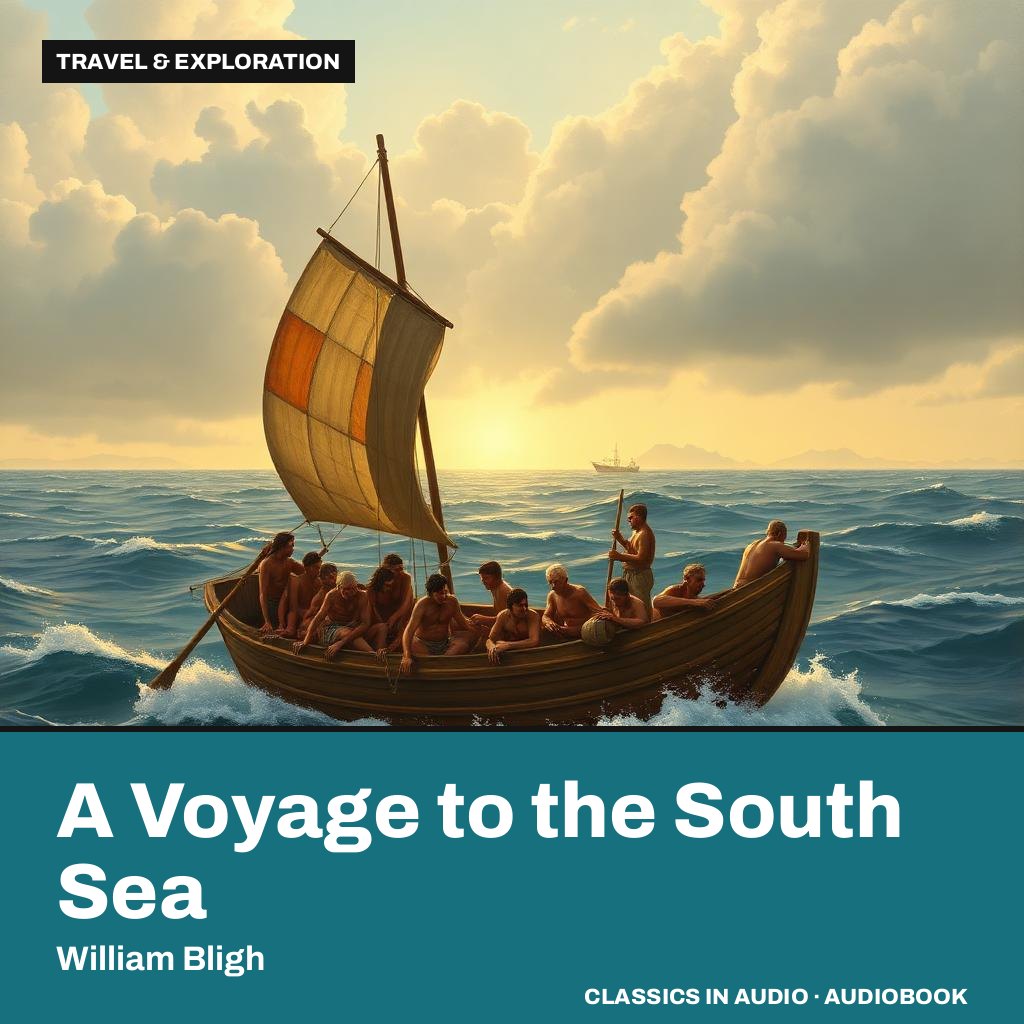
A Voyage to the South Sea
Undertaken by Command of His Majesty for the Purpose of Conveying the Bread-fruit Tree to the West Indies in His Majesty's Ship the Bounty Commanded by Lieutenant William Bligh; Including an Account of the Mutiny on Board the Said Ship and the Subsequent Voyage of Part of the Crew in the Ship's Boat from Tofoa, One of the Friendly Islands, to Timor, a Dutch Settlement in the East Indies
by William Bligh (1754–1817)
Unabridged audiobook · about 7 hr 19 min · English · read by a synthetic voice · MP3, no DRM
€4.90
Buy 2 audiobooks or more: −10%. Buy 5 or more: −20%.
Secure payment by Stripe. Your download link is e-mailed to you at once: the first 30 minutes are usually ready within a few minutes, and the rest follows while you listen. Listen online or download the MP3.
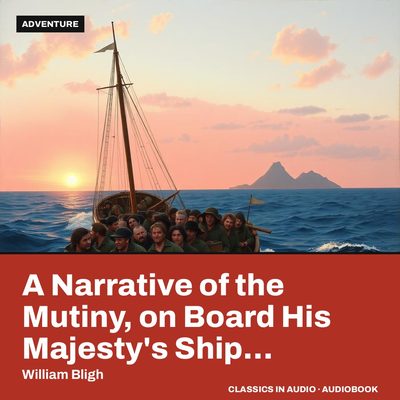
In 1787 the Royal Navy bought a small merchant vessel, renamed her the Bounty, and sent her to Tahiti with a plain commercial errand: to collect young breadfruit trees and carry them to the British plantations in the West Indies, where planters hoped the fruit would feed enslaved workers cheaply. This is the commander's own account of that expedition, expanded from a shorter narrative rushed into print after the news broke.
William Bligh, who had sailed with Captain Cook on his last voyage, writes as a naval officer: precise about weather, provisions, soundings and ship's dimensions, and often blunt about the people he meets. The first part follows the long passage via Tenerife and a failed attempt to round Cape Horn, then the months among the chiefs and villagers of Tahiti, with their feasts, thefts, wrestling matches and gifts. Then comes the mutiny of April 1789, told from the side of the man cast adrift.
The second half is a sustained feat of seamanship. Bligh and eighteen men sail an overloaded open launch across thousands of miles of ocean, short of food and water, toward a Dutch settlement on Timor. Readers of sea adventure will find a document written by someone who lived through it, with the details intact.
Text: Project Gutenberg edition no. 15411, read without its licence notices.