Anahuac
Or, Mexico and the Mexicans, Ancient and Modern
by Edward Burnett Tylor (1832–1917)
Unabridged audiobook · about 10 hr 26 min · English · read by a synthetic voice · MP3, no DRM
€5.90
Buy 2 audiobooks or more: −10%. Buy 5 or more: −20%.
Secure payment by Stripe. Your download link is e-mailed to you at once: the first 30 minutes are usually ready within a few minutes, and the rest follows while you listen. Listen online or download the MP3.
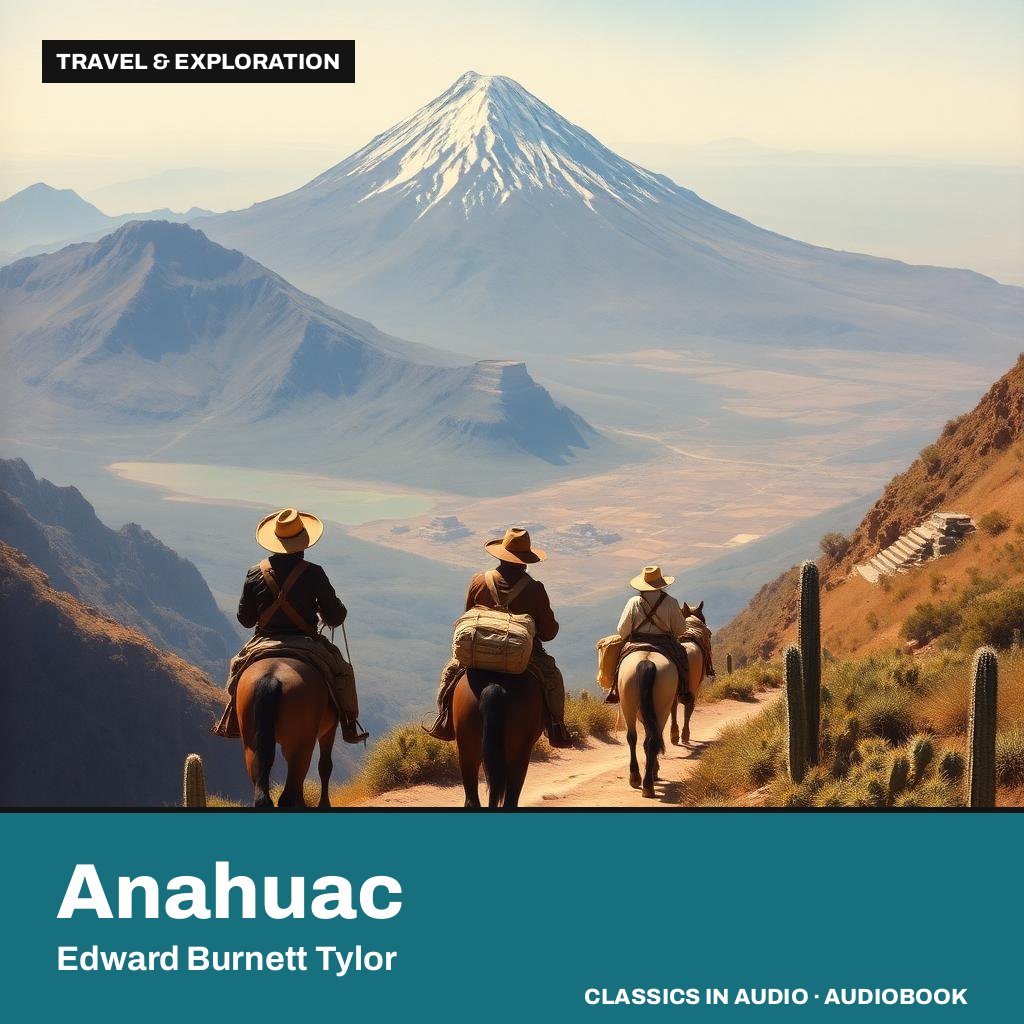
Anahuac is an account of a journey through Mexico in 1856, made by the young English traveller Edward B. Tylor with his friend Henry Christy, a banker and collector of antiquities. Tylor was later regarded as a founder of modern anthropology, and that curiosity runs through the book. He rides from the capital to silver mines, volcanoes, sugar estates and Indian villages, and sets down what he sees: markets, mule trains, bullfights, processions in Holy Week, wayside robbers, and the climb up Popocatepetl to look into its crater.
The country he describes is the young, unstable republic, with its revolutions, its powerful clergy and its debt-bound labourers. Beneath it he keeps finding the older Aztec world. He examines the pyramids of Teotihuacan and Cholula, obsidian knives and stone hammers, the calendar stone, picture-writing and the ruined hill-palaces near Tezcuco, and he asks what such objects reveal about the people who made them.
The book is useful today because it was written by an observer who trusted measurement and comparison, and who looked at ordinary things such as how water was carried, how cloth was spun and how salt was made. It shows mid-nineteenth-century Mexico as a visitor met it, and shows a future scholar learning how to read the past from objects.
Text: Project Gutenberg edition no. 13115, read without its licence notices.