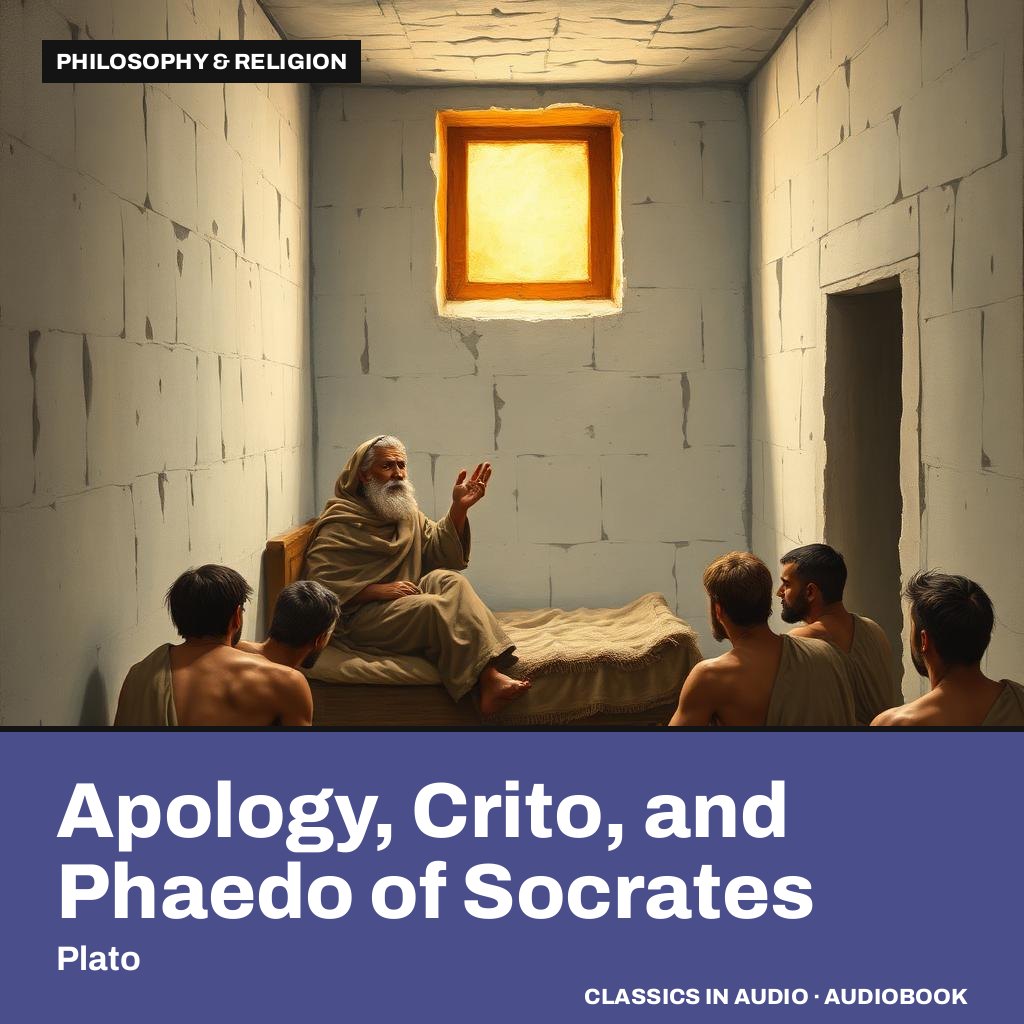
Apology, Crito, and Phaedo of Socrates
by Plato (428 BC–348 BC)
Unabridged audiobook · about 4 hr 40 min · English · read by a synthetic voice · MP3, no DRM
€3.90
Buy 2 audiobooks or more: −10%. Buy 5 or more: −20%.
Secure payment by Stripe. Your download link is e-mailed to you at once: the first 30 minutes are usually ready within a few minutes, and the rest follows while you listen. Listen online or download the MP3.
Three short dialogues by Plato follow the last weeks of Socrates, the Athenian philosopher condemned in 399 BC. In the Apology he stands before a jury of his fellow citizens, at about seventy years old and unused to courtrooms, to answer two charges: that he rejected the city's gods and that he corrupted its young men. He does not plead for mercy. He questions his accuser, explains why he has spent his life cross-examining politicians, poets and craftsmen, and says plainly that he fears dishonour more than death.
The Crito moves to the prison, where an old friend arrives before dawn with a plan of escape already arranged. Socrates agrees to follow the argument wherever it leads, and the talk turns to what a citizen owes the laws of his city, even a city that has wronged him. The Phaedo then describes his final day among friends, who gather to hear him reason about whether the soul outlasts the body. Their questions are sharp and their doubts are real.
Plato, who knew Socrates as his teacher and later founded the Academy at Athens, wrote these works as a memorial and as an argument. They remain the clearest account of how an ancient thinker faced a state verdict, and they still raise live questions about conscience, obedience and mortality.
Text: Project Gutenberg edition no. 13726, read without its licence notices.
More by Plato
 The RepublicPlato19 hr 43 min€6.90
 ApologyPlato1 hr 39 min€3.90
 SymposiumPlato3 hr 04 min€3.90
 PhaedrusPlato3 hr 36 min€3.90
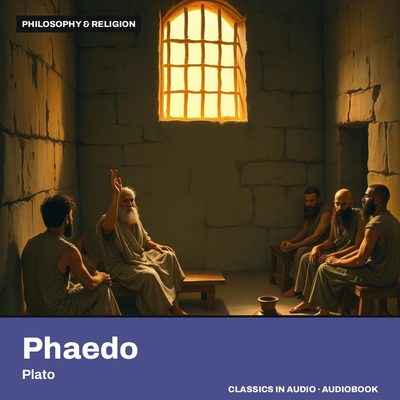 PhaedoPlato3 hr 56 min€3.90
 GorgiasPlato5 hr 25 min€4.90
More philosophy & religion
 MeditationsMarcus Aurelius6 hr 33 min€4.90
 On LibertyJohn Stuart Mill5 hr 02 min€4.90
 Beyond Good and EvilFriedrich Wilhelm Nietzsche6 hr 17 min€4.90
 Thus Spake ZarathustraFriedrich Wilhelm Nietzsche10 hr 25 min€5.90
 The EnchiridionEpictetus1 hr 24 min€3.90
 The Nicomachean Ethics of AristotleAristotle10 hr 16 min€5.90