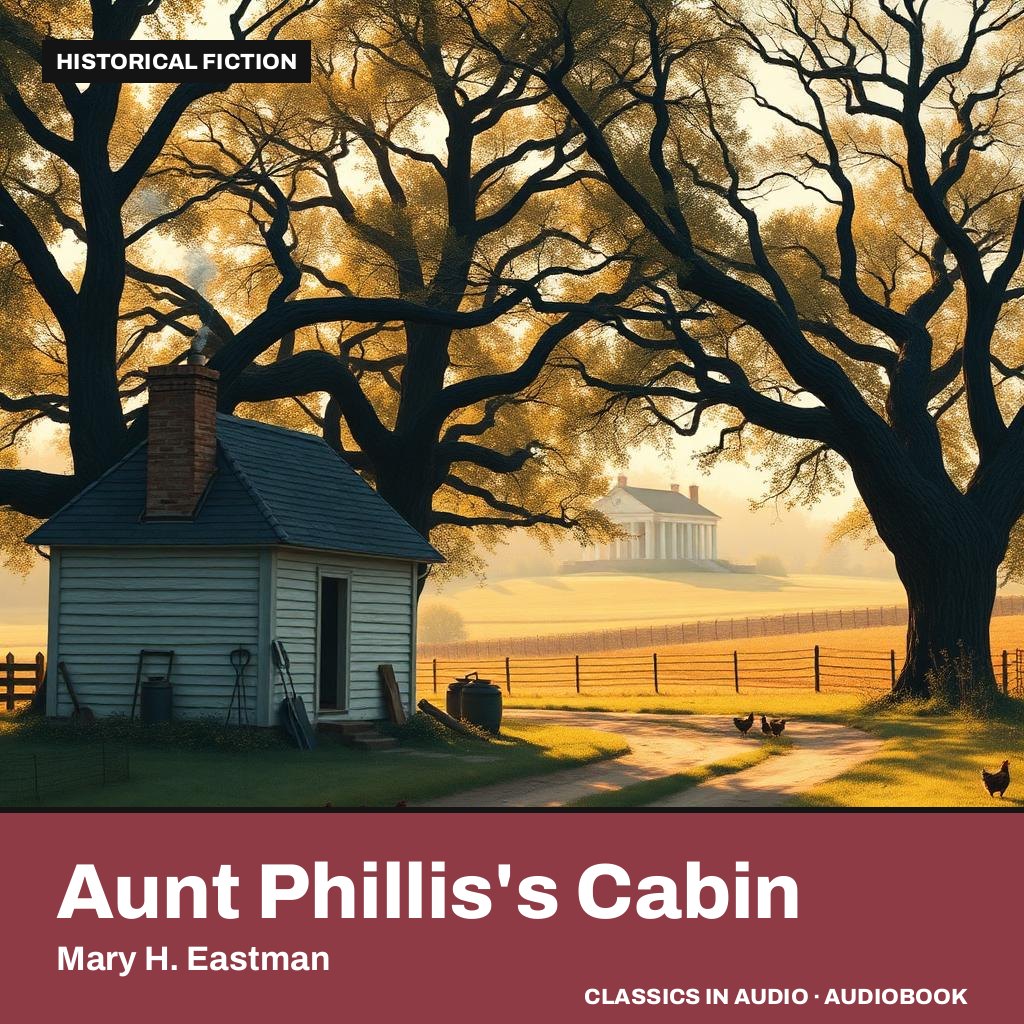
Aunt Phillis's Cabin
Or, Southern Life As It Is
by Mary H. Eastman (1818–1887)
Unabridged audiobook · about 9 hr 17 min · English · read by a synthetic voice · MP3, no DRM
€4.90
Buy 2 audiobooks or more: −10%. Buy 5 or more: −20%.
Secure payment by Stripe. Your download link is e-mailed to you at once: the first 30 minutes are usually ready within a few minutes, and the rest follows while you listen. Listen online or download the MP3.
Aunt Phillis's Cabin appeared in 1852 as a direct answer to Harriet Beecher Stowe's Uncle Tom's Cabin. Mary H. Eastman, a Virginia-born writer who had married an army officer and lived at frontier posts, set out to show a Southern plantation as its defenders wished it to be seen. The book is a work of political and didactic fiction, and it belongs on the shelf as a document of its argument rather than as a neutral portrait.
The story follows the households of a Virginia plantation in the years before the Civil War. Phillis, an enslaved woman who holds a position of trust, is shown in contented service, and the novel sets her life beside the hardships of free laborers in the North. Eastman wrote the book as a defense of slavery, and her opening pages lean on Scripture and the story of Noah and Ham to claim that the institution had divine sanction.
That claim is false and the portrait is one-sided, which is exactly why the book is still worth hearing. It shows how proslavery writers built their case, what images they used, and how fiction was drafted into the national quarrel that preceded the war. Heard beside Stowe's novel, it makes the argument of 1852 easier to understand.
Text: Project Gutenberg edition no. 16741, read without its licence notices.