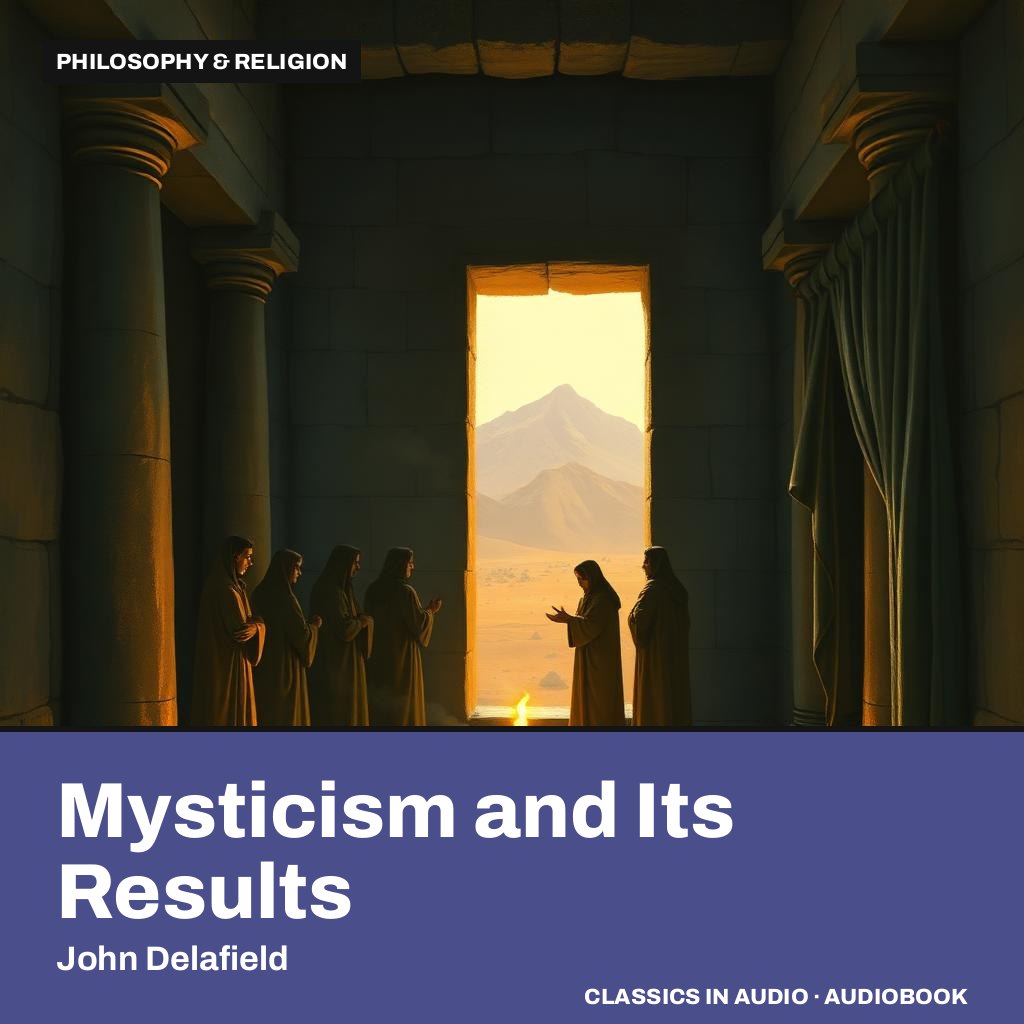
Mysticism and Its Results
Being an Inquiry into the Uses and Abuses of Secrecy
by John Delafield (1812–1866)
Unabridged audiobook · about 2 hr 29 min · English · read by a synthetic voice · MP3, no DRM
€3.90
Buy 2 audiobooks or more: −10%. Buy 5 or more: −20%.
Secure payment by Stripe. Your download link is e-mailed to you at once: the first 30 minutes are usually ready within a few minutes, and the rest follows while you listen. Listen online or download the MP3.
John Delafield's essay, written in mid-nineteenth-century New York, asks a plain question: when is secrecy a virtue, and when does it become a tool of power? He begins gently, with the privacy of prayer, modesty and solitary reflection, then turns to the darker uses of concealment: asceticism, superstition, and the awe that rulers and priesthoods have cultivated by keeping their workings hidden.
The book is a sweeping survey of secret and semi-secret institutions. Its chapters move from the patriarchal worship of the ancient Near East and the Magi to the mystery rites of Egypt, Greece and Rome, then on to the Chaldean Cabbalists, Zoroaster, Pythagoras and his league, the Druids and the Thugs. The later chapters take up the early Church, the Inquisition, the monastic and knightly orders, the Jesuits and the Rosicrucians. Delafield, an American scholar and a Columbia College graduate, calls his work suggestive rather than didactic, and it reads as the argument of a committed republican of his day.
The last chapter ties this long history to the American experiment in self-government, which he saw as under threat. Today the book is worth hearing as a record of how a Victorian-era American read the history of secrecy, and of the anxieties that shaped his view of the past.
Text: Project Gutenberg edition no. 22314, read without its licence notices.





