Quiet Talks on Prayer
by Samuel Dickey Gordon (1859–1936)
Unabridged audiobook · about 4 hr 47 min · English · read by a synthetic voice · MP3, no DRM
€3.90
Buy 2 audiobooks or more: −10%. Buy 5 or more: −20%.
Secure payment by Stripe. Your download link is e-mailed to you at once: the first 30 minutes are usually ready within a few minutes, and the rest follows while you listen. Listen online or download the MP3.
Quiet Talks on Prayer is a book of Christian devotional teaching, first published in the early twentieth century, in which the American evangelical writer S. D. Gordon asks a plain question: what does prayer actually do, and why does it matter more than anything else a believer can offer? Gordon was a popular speaker in the Protestant revival circles of his day, and the book keeps the easy rhythm of the talks it grew from.
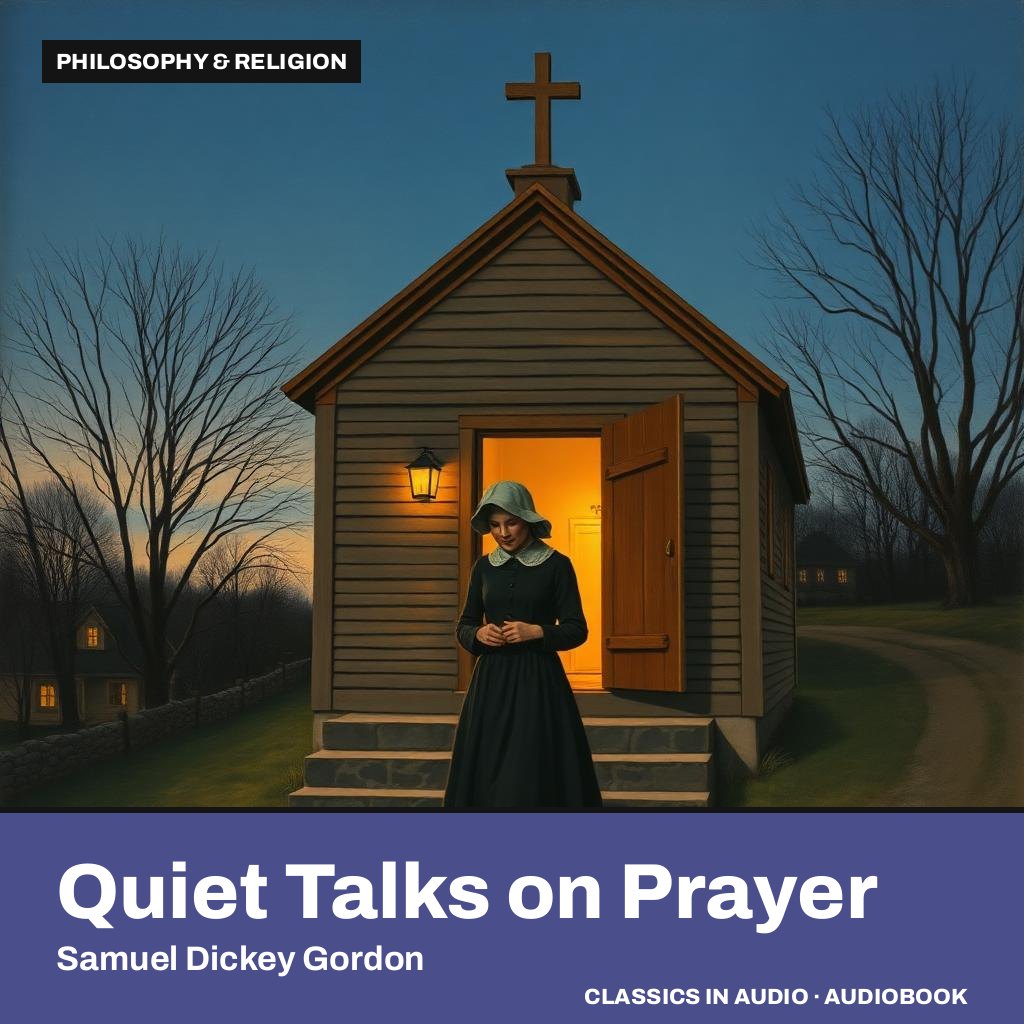
His opening argument sets out one source of power in a person's life, the Holy Spirit, and five ways that power flows outward: through the kind of life a person lives, through speech, through service, through money, and through prayer. He ranks them. A stammering speaker with a sincere life, he says, can move a listener more than a polished one without it, and he places prayer above all the others because its reach is not tied to a single place. His example is a plain-looking woman in a much-mended gown, slipping quietly out of church, who may be doing more for the world than many people who get far more notice.
The chapters that follow take up the practical and doctrinal questions around prayer. Listeners interested in the devotional life of English-speaking Protestants a century ago will find a clear, earnest voice here, and it is easy to follow whatever one's own beliefs.
Text: Project Gutenberg edition no. 13196, read without its licence notices.