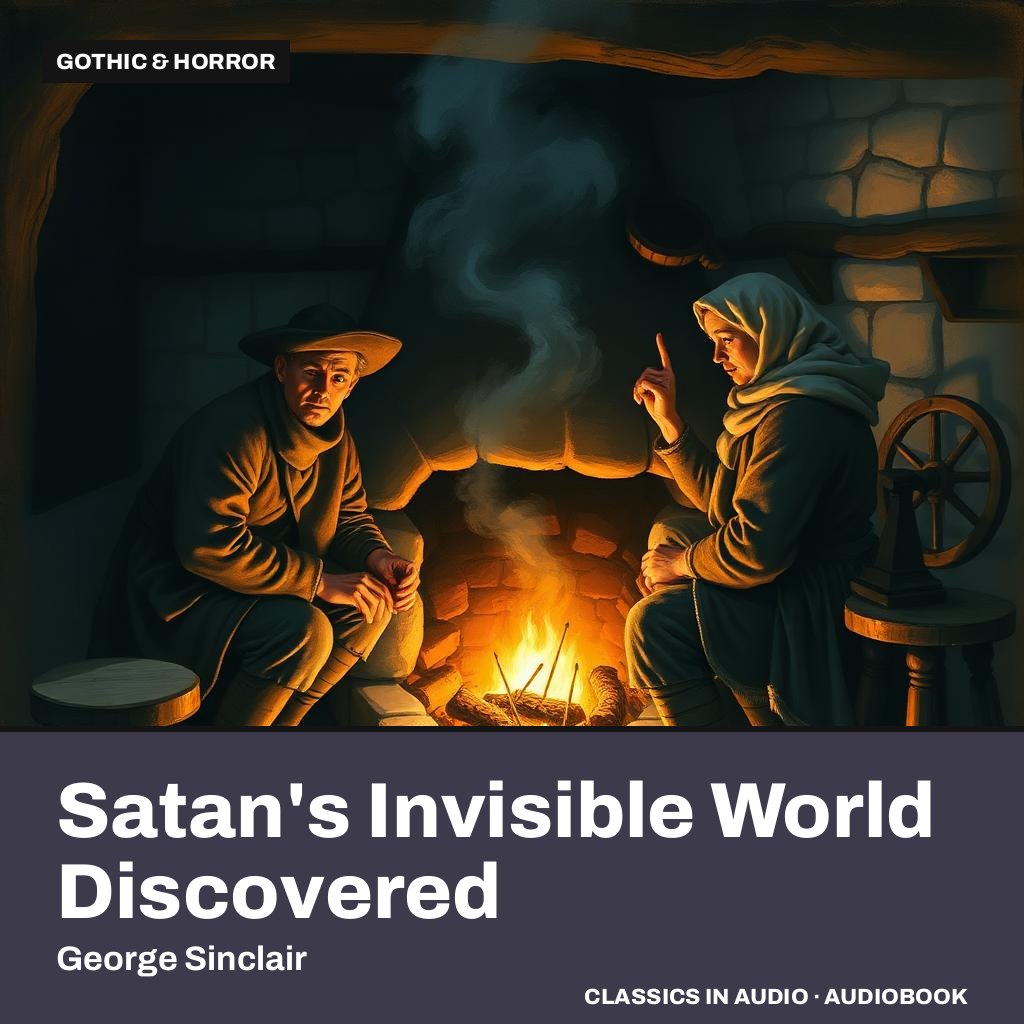
Satan's Invisible World Discovered
Or a Choice Collection of Modern Relations, Proving Evidently, Against the Atheists of This Present Age, That There Are Devils, Spirits, Witches, and Apparitions, from Authentic Records, and Attestations of Witnesses of Undoubted Veracity. To Which Is Now Added, That Marvellous History of Major Weir and His Sister, the Witches of Bargarran, Pittenweem, Calder, &c.
Unabridged audiobook · about 4 hr 50 min · English · read by a synthetic voice · MP3, no DRM
€3.90
Buy 2 audiobooks or more: −10%. Buy 5 or more: −20%.
Secure payment by Stripe. Your download link is e-mailed to you at once: the first 30 minutes are usually ready within a few minutes, and the rest follows while you listen. Listen online or download the MP3.
George Sinclair's collection of supernatural reports was first published in 1685, and this edition is a London reprint of 1814. It gathers some forty-three "relations" of ghosts, demonic hauntings, witches and warlocks, set mostly in Scotland but also in England, France, Sweden and Ireland. Each is offered as evidence against those the author calls the atheists of his age, and each leans on letters, court records and the word of named witnesses.
The book opens in 1676 at Pollock, near Glasgow, where Sir George Maxwell lies sick with a burning pain in his side. A young, apparently dumb girl declares that a neighbour has made a wax figure stuck with pins and hidden it in her house. Later chapters include the drummer of Tedworth, the devil of Glenluce, the apparition in Mary King's Close in Edinburgh, and the story of Major Weir and his sister.
Sinclair was a Scottish mathematician and natural philosopher who taught at Glasgow, and he presented these tales as a serious inquirer would. Today the collection is useful for another reason: it shows what educated people in the late seventeenth century accepted as proof, and how fear, rumour and accusation could take shape in ordinary households and small towns.
Text: Project Gutenberg edition no. 70055, read without its licence notices.
More gothic & horror
 FrankensteinMary Wollstonecraft Shelley6 hr 52 min€4.90
 DraculaBram Stoker13 hr 40 min€5.90
 The Strange Case of Dr. Jekyll and Mr. HydeRobert Louis Stevenson2 hr 17 min€3.90
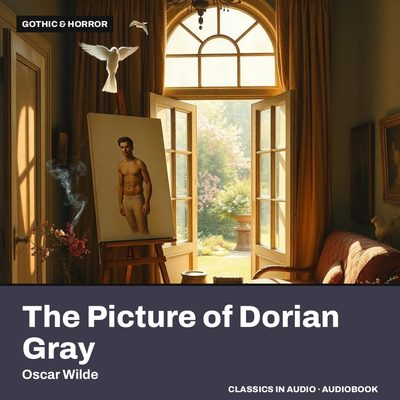 The Picture of Dorian GrayOscar Wilde7 hr 01 min€4.90
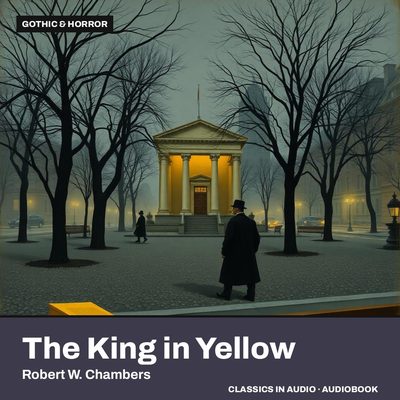 The King in YellowRobert W. Chambers6 hr 33 min€4.90
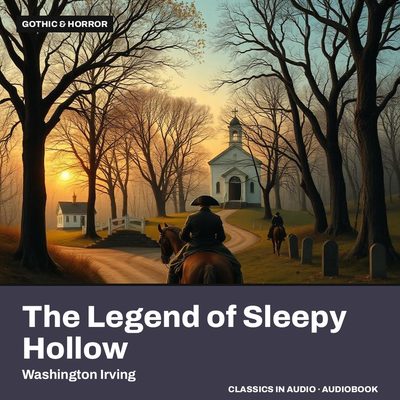 The Legend of Sleepy HollowWashington Irving1 hr 09 min€3.90