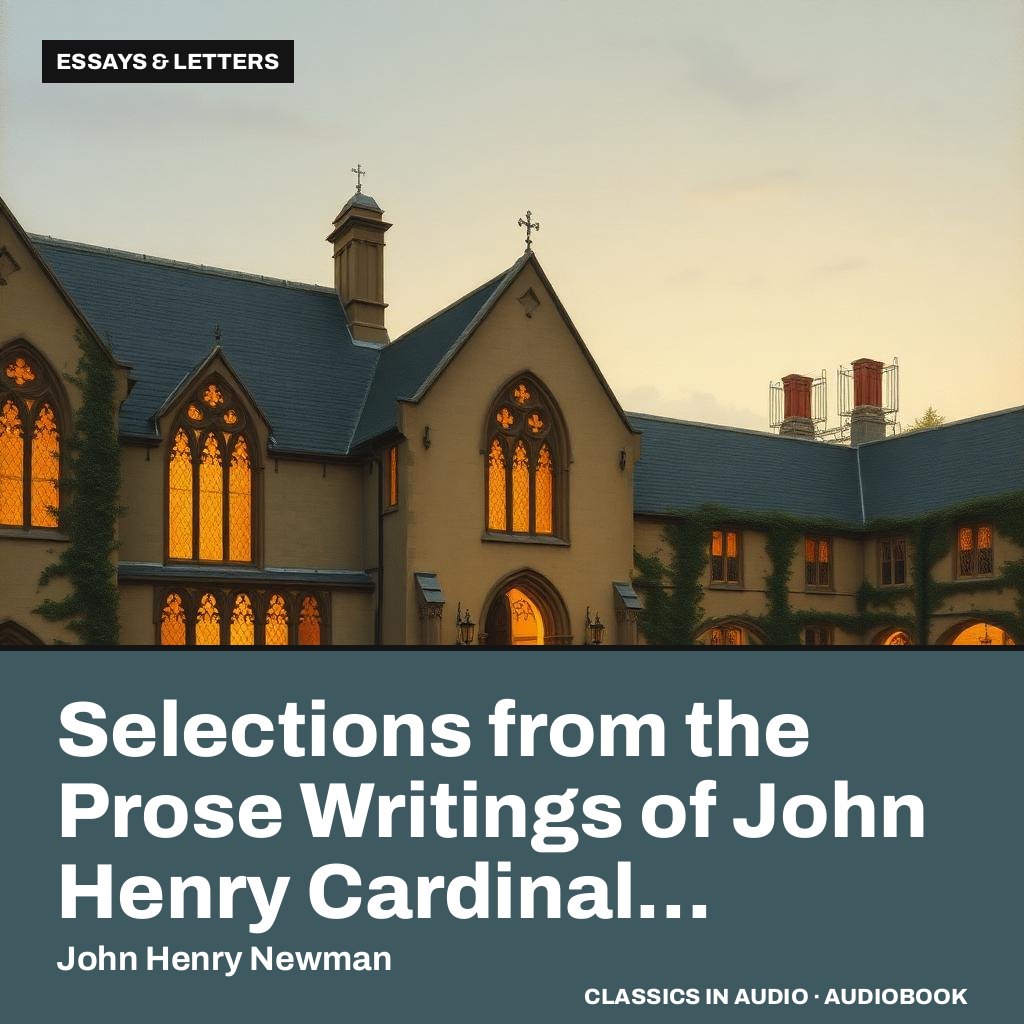
Selections from the Prose Writings of John Henry Cardinal Newman
For the Use of Schools
by John Henry Newman (1801–1890)
Unabridged audiobook · about 6 hr 46 min · English · read by a synthetic voice · MP3, no DRM
€4.90
Buy 2 audiobooks or more: −10%. Buy 5 or more: −20%.
Secure payment by Stripe. Your download link is e-mailed to you at once: the first 30 minutes are usually ready within a few minutes, and the rest follows while you listen. Listen online or download the MP3.
This is a school anthology of the prose of John Henry Newman, the Victorian churchman and writer, gathered so that students could study one of the finest English stylists at work. The editor's opening pages sketch his life and set out the praise of critics such as Edmund Gosse, George Saintsbury and H. E. Beeching, who admired his clear arrangement, quiet irony and exact choice of words.
Newman was born in London in 1801 and made his name at Oxford as a scholar, teacher and preacher. He became a leading figure in the Tractarian Movement of the 1830s, entered the Catholic Church in 1845, founded the Oratory at Birmingham, and was made a cardinal in 1879. His writing reflects that path: argument and reflection on faith, education, conscience and the search for truth, set in a century of fast social change and religious dispute.
The selections are brief and varied, which makes the book a good way into an author who can seem forbidding by reputation. Listeners curious about Victorian thought, or about how English prose can persuade through patience and precision rather than noise, will find a lucid guide here. His chosen epitaph, which speaks of passing from shadows and images into truth, sums up the spirit of the whole.
Text: Project Gutenberg edition no. 41310, read without its licence notices.
More by John Henry Newman
 Apologia Pro Vita SuaJohn Henry Newman12 hr 48 min€5.90
 An Essay on the Development of Christian DoctrineJohn Henry Newman13 hr 14 min€5.90
 An Essay in Aid of a Grammar of AssentJohn Henry Newman12 hr 48 min€5.90
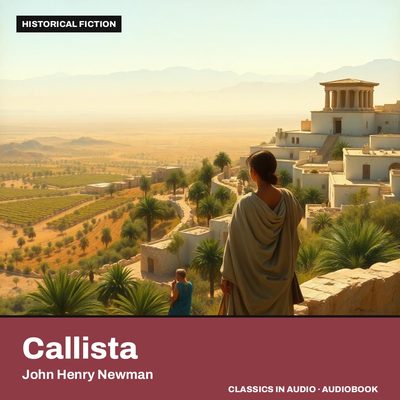 CallistaJohn Henry Newman8 hr 45 min€4.90
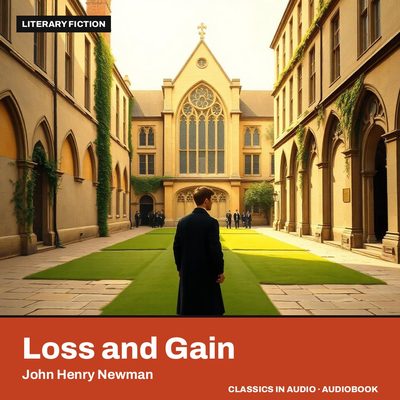 Loss and GainJohn Henry Newman9 hr 52 min€4.90
More essays & letters
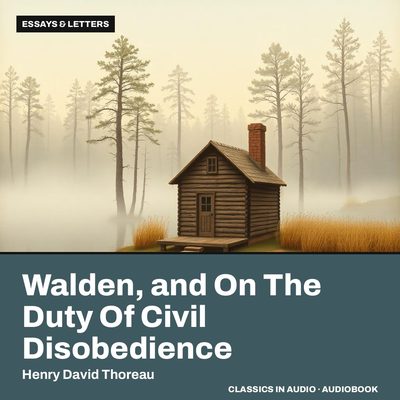 Walden, and On The Duty Of Civil DisobedienceHenry David Thoreau9 hr 35 min€4.90
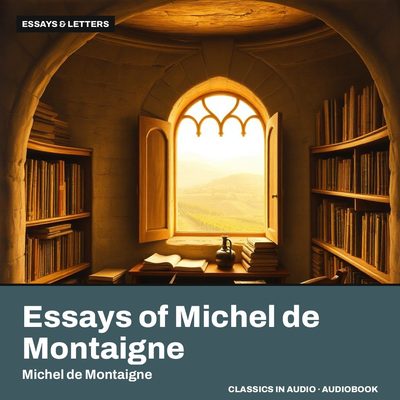 Essays of Michel de MontaigneMichel de Montaigne48 hr 35 min€9.90
 De ProfundisOscar Wilde1 hr 32 min€3.90
 Essays by Ralph Waldo EmersonRalph Waldo Emerson8 hr 40 min€4.90
 EssaysRalph Waldo Emerson6 hr 43 min€4.90
 The Notebooks of Leonardo Da VinciLeonardo da Vinci21 hr 55 min€7.90