Ten Great Religions
An Essay in Comparative Theology
by James Freeman Clarke (1810–1888)
Unabridged audiobook · about 17 hr 34 min · English · read by a synthetic voice · MP3, no DRM
€6.90
Buy 2 audiobooks or more: −10%. Buy 5 or more: −20%.
Secure payment by Stripe. Your download link is e-mailed to you at once: the first 30 minutes are usually ready within a few minutes, and the rest follows while you listen. Listen online or download the MP3.
Ten Great Religions is a survey of the world's major faiths, written in the nineteenth century by James Freeman Clarke, a Unitarian minister in Boston. His aim, stated at the outset, is to let a reader learn the doctrines and customs of the principal religions without wading through shelves of specialist volumes. He had made the subject a speciality for more than twenty-five years before writing it.
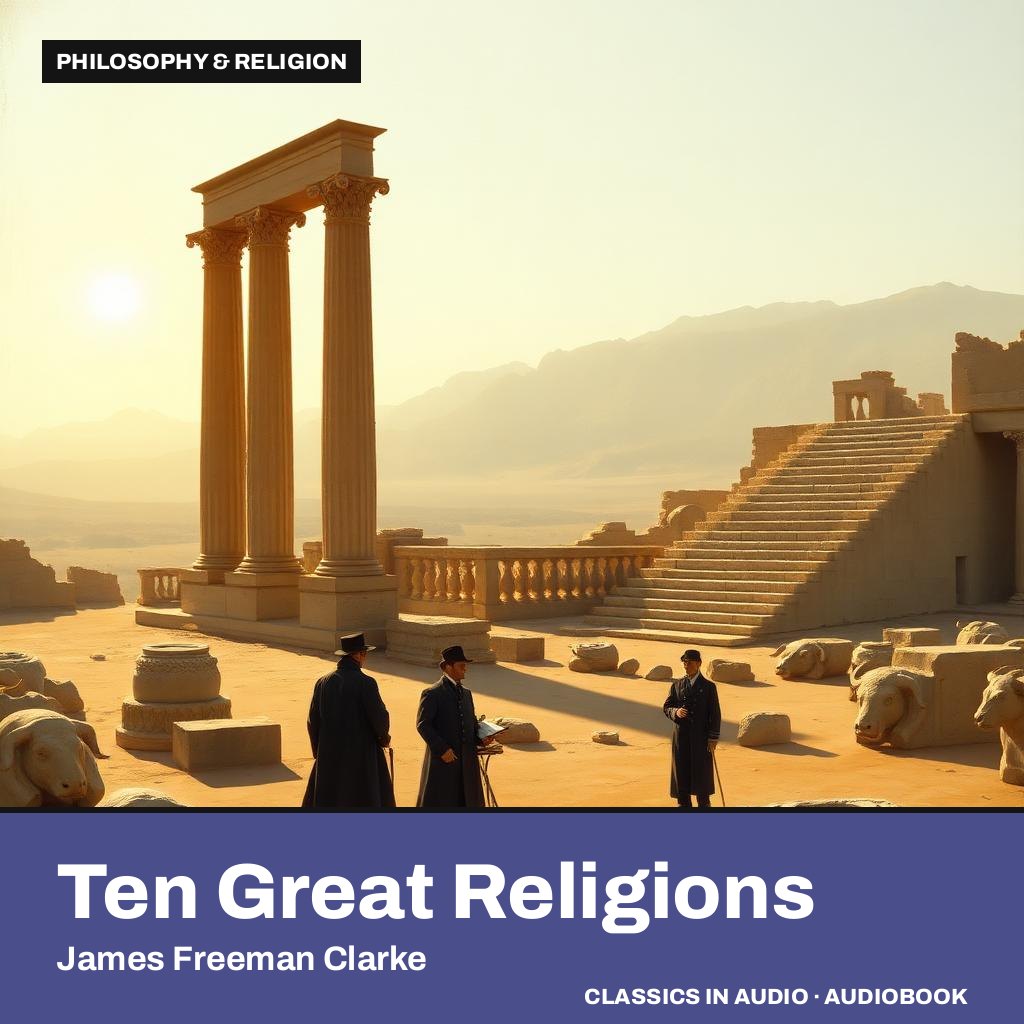
The chapters move from China and Confucius, through Brahmanism and Buddhism, to Zoroaster and the Zend Avesta, then to the gods of Egypt, Greece and Rome, the Norse and Teutonic peoples, the Jewish religion, and finally Mohammed and Islam. Along the way Clarke recounts how Europeans came to know these traditions: Sir William Jones in India, Anquetil du Perron carrying the Zend Avesta to France, the ruins of Persepolis. He also draws comparisons, such as his famous label for Buddhism as the Protestantism of the East.
Clarke writes as a committed Christian, and his verdicts, especially on Islam, reflect the assumptions of his time. That is part of the interest today. The book shows both the early ambitions of comparative religion and the opinions of an educated Victorian-era American as he tried to weigh the faiths of the world against his own.
Text: Project Gutenberg edition no. 14674, read without its licence notices.