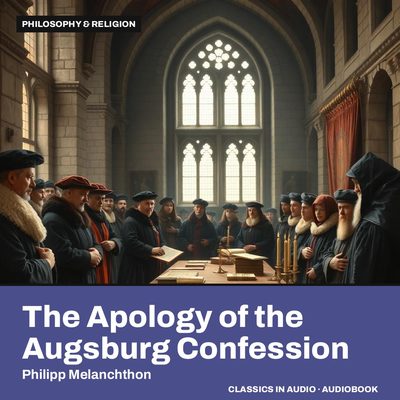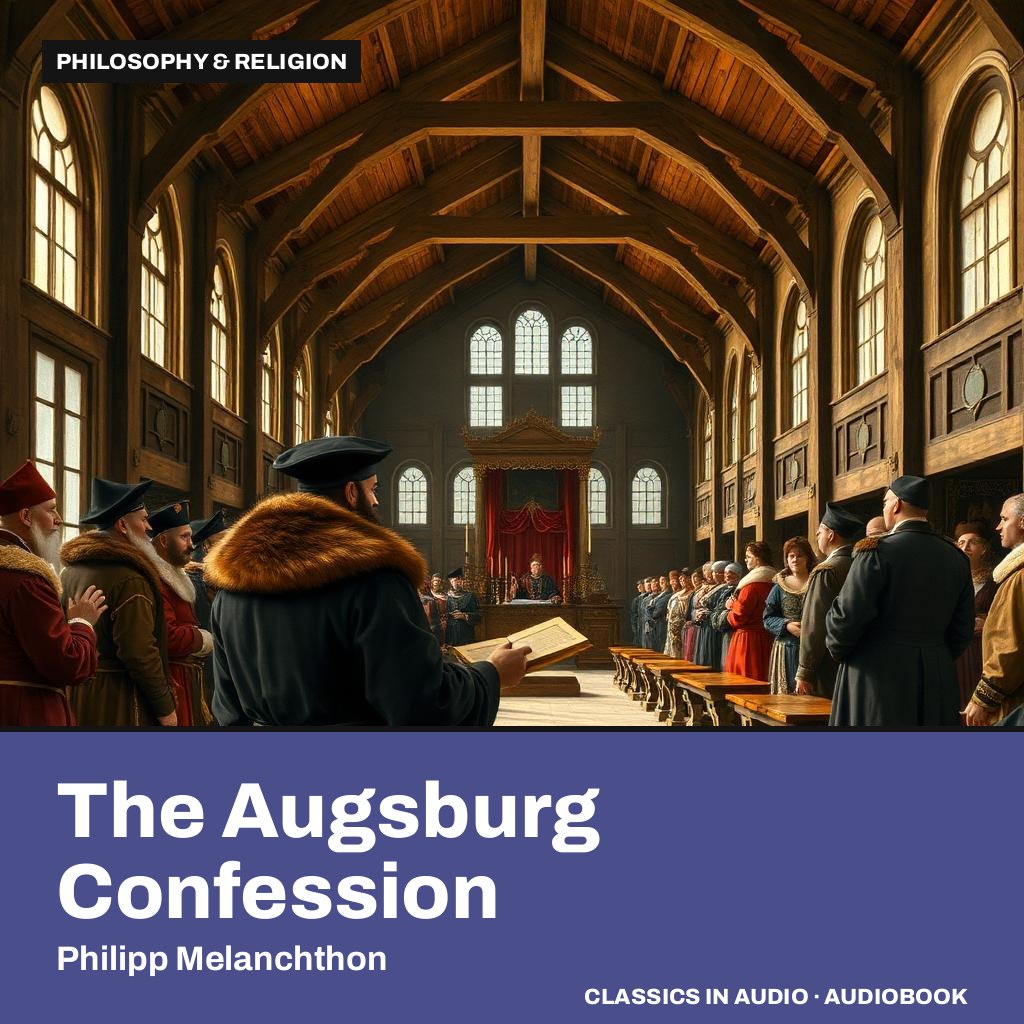
The Augsburg Confession
The Confession of Faith, Which Was Submitted to His Imperial Majesty Charles V at the Diet of Augsburg in the Year 1530
by Philipp Melanchthon (1497–1560)
Unabridged audiobook · about 1 hr 22 min · English · read by a synthetic voice · MP3, no DRM
€3.90
Buy 2 audiobooks or more: −10%. Buy 5 or more: −20%.
Secure payment by Stripe. Your download link is e-mailed to you at once: the first 30 minutes are usually ready within a few minutes, and the rest follows while you listen. Listen online or download the MP3.
The Augsburg Confession is the statement of Lutheran belief that a group of German princes and city representatives laid before the Holy Roman Emperor Charles V at the imperial diet held in Augsburg in 1530. Its preface, heard first, is a formal address to the emperor. The signers explain that they came promptly when summoned, remind him of earlier promises to seek a general church council, and offer to discuss their differences peacefully so that one true religion might again be held across the empire.
The main body sets out the doctrines taught in the reformers' churches, from faith and justification to the sacraments and church order. It then lists practices the authors believed had been wrongly introduced, such as the withholding of the cup from the laity and compulsory clerical celibacy. The text was written mainly by Philipp Melanchthon, a Wittenberg professor of Greek and close colleague of Martin Luther, who aimed for a calm and conciliatory tone.
The document became the foundational creed of the Lutheran churches and a landmark of the Reformation. Hearing it shows how a religious split was argued in the language of loyalty, law and conscience, in a political setting where the stakes were as much civil as spiritual.
Text: Project Gutenberg edition no. 275, read without its licence notices.