The Consolation of Philosophy
by Boethius (480–524)
Unabridged audiobook · about 4 hr 13 min · English · read by a synthetic voice · MP3, no DRM
€3.90
Buy 2 audiobooks or more: −10%. Buy 5 or more: −20%.
Secure payment by Stripe. Your download link is e-mailed to you at once: the first 30 minutes are usually ready within a few minutes, and the rest follows while you listen. Listen online or download the MP3.
Boethius wrote this book in prison, awaiting execution. A Roman aristocrat, scholar and consul, he had risen to become chief minister to Theodoric, the Ostrogothic king who ruled Italy. In 522 he watched his two sons ride to the senate-house as joint consuls. Within a year he was a prisoner at Pavia, stripped of wealth and office, afraid for his family as well as himself.
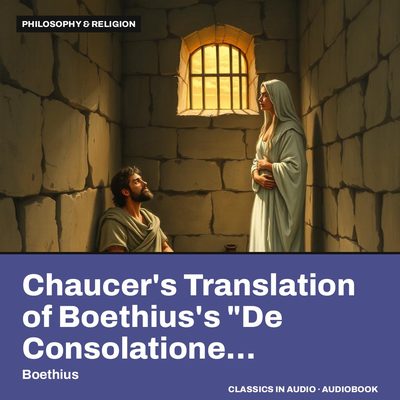
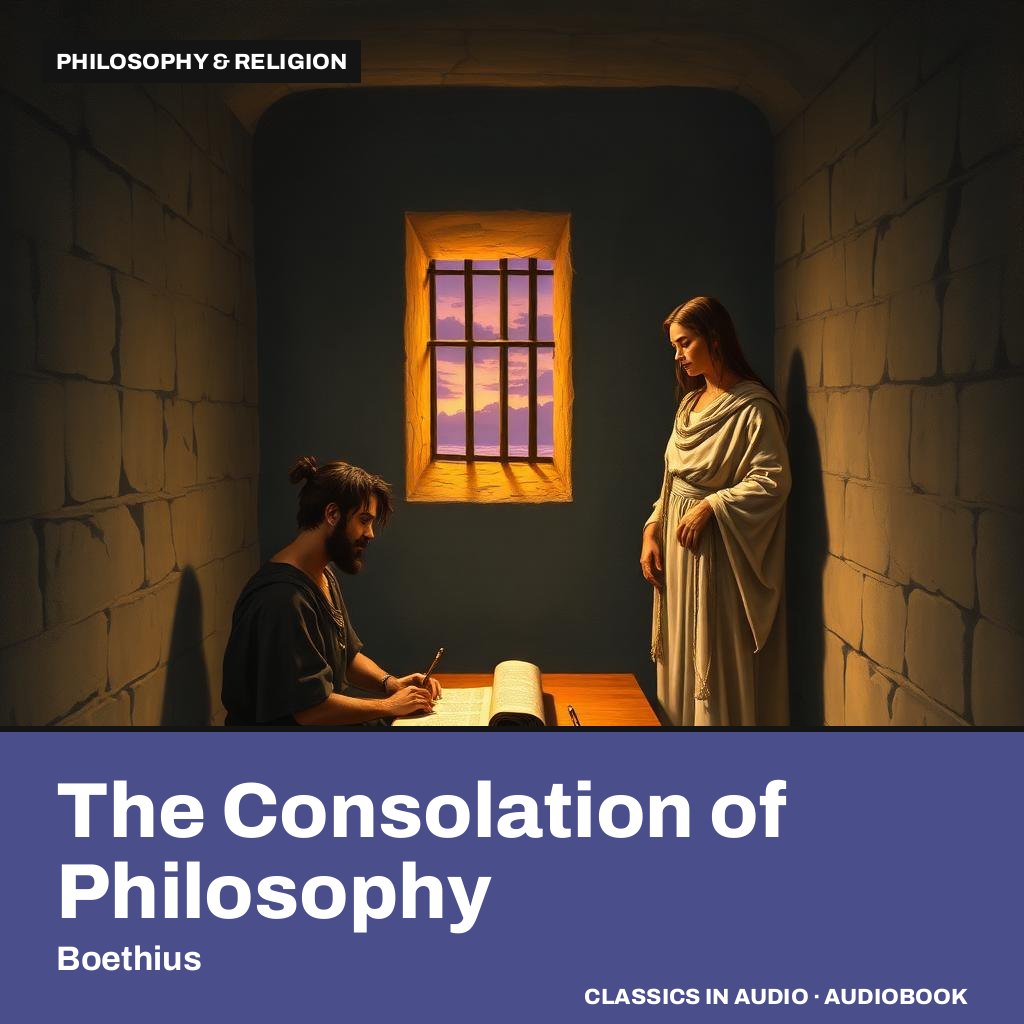
The book opens with him in his cell, writing verses of complaint. Then a woman of towering dignity appears: Philosophy herself. Over five books she answers his bitterness with argument. She examines the gifts of fortune, such as power, riches and fame, and asks whether they ever belonged to him. She then turns to what true happiness might be, and to how a just order can stand beside the world's apparent injustice. Prose dialogue alternates with short poems, so the work moves between reasoning and song.
Boethius also gave the Middle Ages much of its knowledge of Aristotle through his Latin translations. This book was read for a thousand years, and King Alfred was among those who rendered it into English. It remains a human document: a man testing what consolation thought can offer when everything else has been taken away.
Text: Project Gutenberg edition no. 14328, read without its licence notices.