The Cradle of Mankind
Life in Eastern Kurdistan
by William Ainger Wigram (1872–1953)
Unabridged audiobook · about 15 hr 12 min · English · read by a synthetic voice · MP3, no DRM
€6.90
Buy 2 audiobooks or more: −10%. Buy 5 or more: −20%.
Secure payment by Stripe. Your download link is e-mailed to you at once: the first 30 minutes are usually ready within a few minutes, and the rest follows while you listen. Listen online or download the MP3.
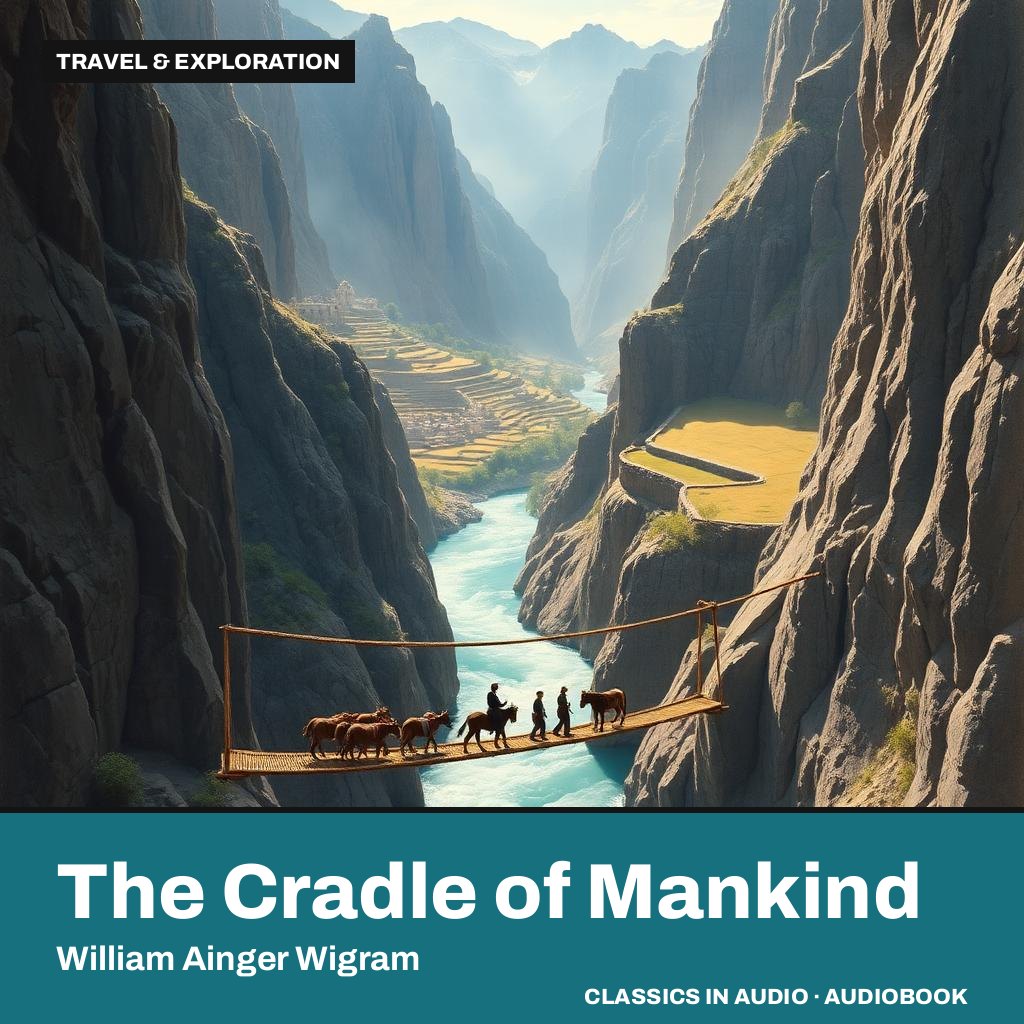
The Cradle of Mankind is a travel book about the mountains and plains where modern Turkey, Iraq and Iran meet, a region the authors call Eastern Kurdistan. The route runs from Aleppo and Urfa through Diarbekr, Mardin and Mosul, then up into the high country of Tyari, Tkhuma and Lake Urmi, and down again towards Baghdad. Along the way come Roman frontier ruins, the shrine at Sheikh Adi, remote mountain churches, rope-hung bridges and the strongholds of tribal chiefs.
Two brothers wrote it. Arthur Wigram lived for years in the district as a member of the Archbishop of Canterbury's mission to the Assyrian Christians, and Edgar Wigram, who also supplied the sketches and photographs, travelled through it for a few months. Their preface says that a good travel book needs both a newcomer's first impressions and a long resident's knowledge, and the pages bear that out. They compare the daily life they found to that of the Patriarchs and of the Scottish Highlands under the Stewart kings.
This edition of 1922 adds two chapters on the Assyrian mountaineers and their fortunes in the Great War. It is worth hearing now for its close record of peoples and places whose world was about to change.
Text: Project Gutenberg edition no. 44417, read without its licence notices.