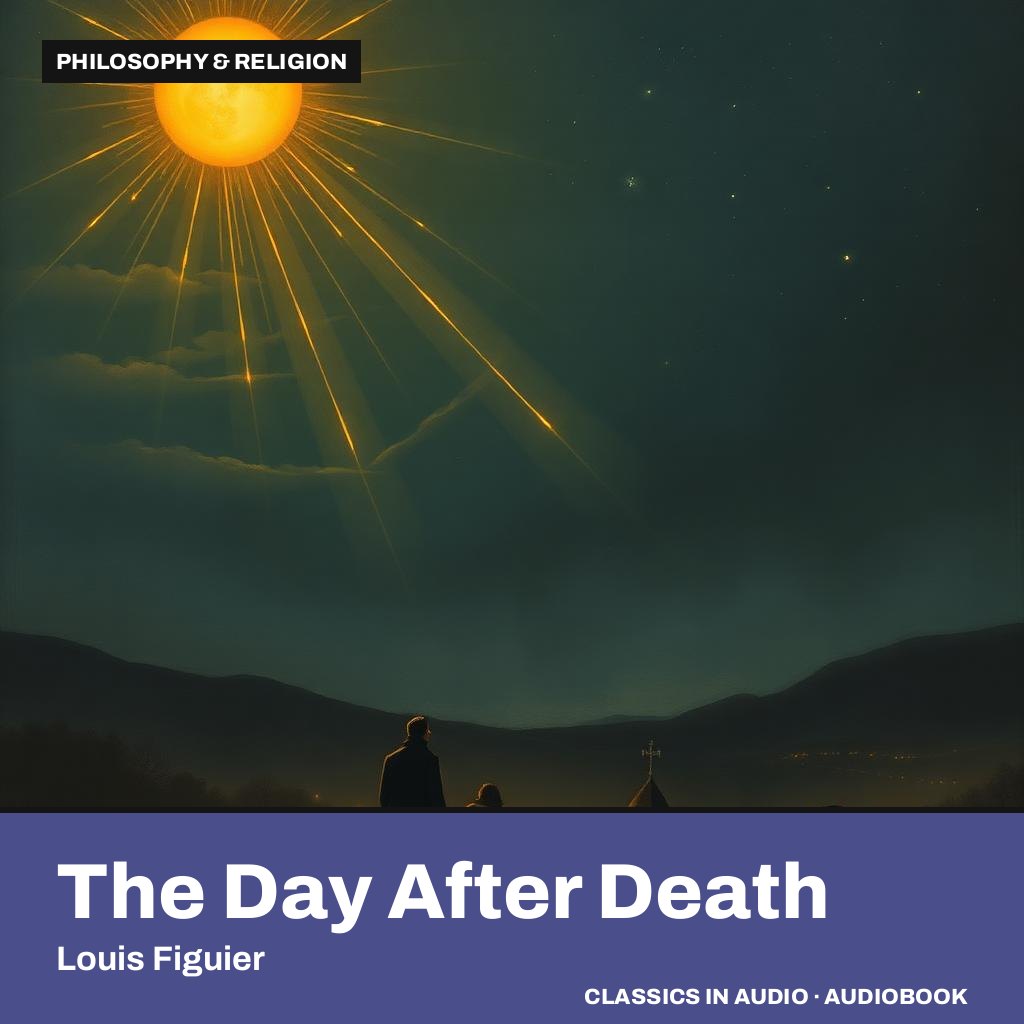
The Day After Death
Or, Our Future Life According to Science (New Edition)
by Louis Figuier (1819–1894)
Unabridged audiobook · about 7 hr 35 min · English · read by a synthetic voice · MP3, no DRM
€4.90
Buy 2 audiobooks or more: −10%. Buy 5 or more: −20%.
Secure payment by Stripe. Your download link is e-mailed to you at once: the first 30 minutes are usually ready within a few minutes, and the rest follows while you listen. Listen online or download the MP3.
Louis Figuier opens this book with a blunt question addressed to every reader: what will you be on the day after your death? He treats it as a problem that science can attempt, and he builds an answer out of astronomy, natural history and speculation. The result is a nineteenth-century French vision of the afterlife in which souls pass through a ladder of existences, are reborn on Earth and on other planets, and rise through the ether toward the Sun, which he pictures as the final home of the most advanced spirits.
The chapter list shows how far he goes. He describes the physical makeup of the Sun, considers whether plants and animals have souls, argues for a plurality of inhabited worlds, and sets out his case for reincarnation, then answers the objections he expects, including the charge that he is merely reviving ancient metempsychosis or leaning on Darwin. The closing chapters turn practical, urging virtue, study of nature and a calm attitude toward dying.
Figuier (1819-1894) was a French writer who made his name popularising science, and the book reads as a popular science author trying to settle the oldest religious question. It is a curious record of how Victorian-era readers mixed physics, faith and hope, and it still raises questions about death that people ask today.
Text: Project Gutenberg edition no. 55230, read without its licence notices.
More by Louis Figuier
 The Insect WorldLouis Figuier14 hr 35 min€5.90
 The Ocean WorldLouis Figuier20 hr 35 min€7.90
 Primitive ManLouis Figuier10 hr 23 min€5.90
 The Human RaceLouis Figuier13 hr 11 min€5.90
 The World Before the DelugeLouis Figuier15 hr 13 min€6.90





