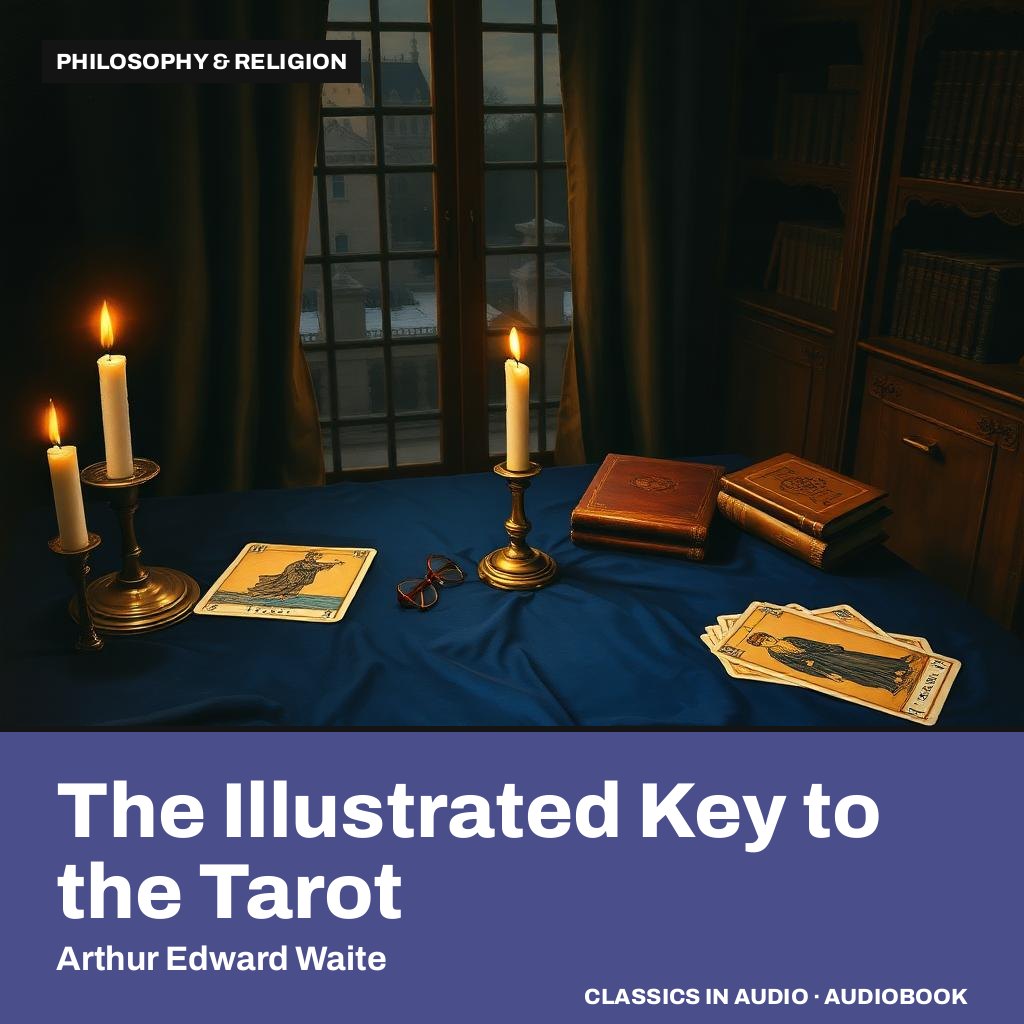
The Illustrated Key to the Tarot
The Veil of Divination: Illustrating the Greater and Lesser Arcana, Embracing the Veil and Its Symbols, Secret Tradition Under the Veil of Divination: Art of Tarot Divination: Outer Method of the Oracles: The Tarot in History: Inner Symbolism: The Greater Keys
by Arthur Edward Waite (1857–1942)
Unabridged audiobook · about 3 hr 28 min · English · read by a synthetic voice · MP3, no DRM
€3.90
Buy 2 audiobooks or more: −10%. Buy 5 or more: −20%.
Secure payment by Stripe. Your download link is e-mailed to you at once: the first 30 minutes are usually ready within a few minutes, and the rest follows while you listen. Listen online or download the MP3.
Arthur Edward Waite's Illustrated Key to the Tarot is a guide to the seventy-eight cards of the Tarot, first published in 1910 and written by a scholar of Western esotericism. Waite, an American-born writer who lived in England and was a member of the Hermetic Order of the Golden Dawn, set out to rescue the cards from the fortune-tellers who had made them a trade. He argues that behind the common practice of divination lies a body of symbolism worth reading on its own terms.
The book is arranged in three parts. The first examines the twenty-two Greater Arcana, the four suits of the Lesser Arcana, and the claims made for the cards' history, with Waite sharply critical of the French occultists who had shaped them. The second part reads the trumps one by one for their inner meaning, from the Fool to the World. The third sets out the divinatory meanings of every card and a single, simple method of laying them out.
The cards were drawn by Pamela Colman Smith under Waite's direction, and her designs became the pattern for countless later decks. Listeners who know those images, or who are curious about how occult ideas of the early twentieth century took shape, will find the source here, along with Waite's formal, opinionated and sometimes prickly voice.
Text: Project Gutenberg edition no. 43548, read without its licence notices.