The Story of Geographical Discovery
How the World Became Known
by Joseph Jacobs (1854–1916)
Unabridged audiobook · about 4 hr 42 min · English · read by a synthetic voice · MP3, no DRM
€3.90
Buy 2 audiobooks or more: −10%. Buy 5 or more: −20%.
Secure payment by Stripe. Your download link is e-mailed to you at once: the first 30 minutes are usually ready within a few minutes, and the rest follows while you listen. Listen online or download the MP3.
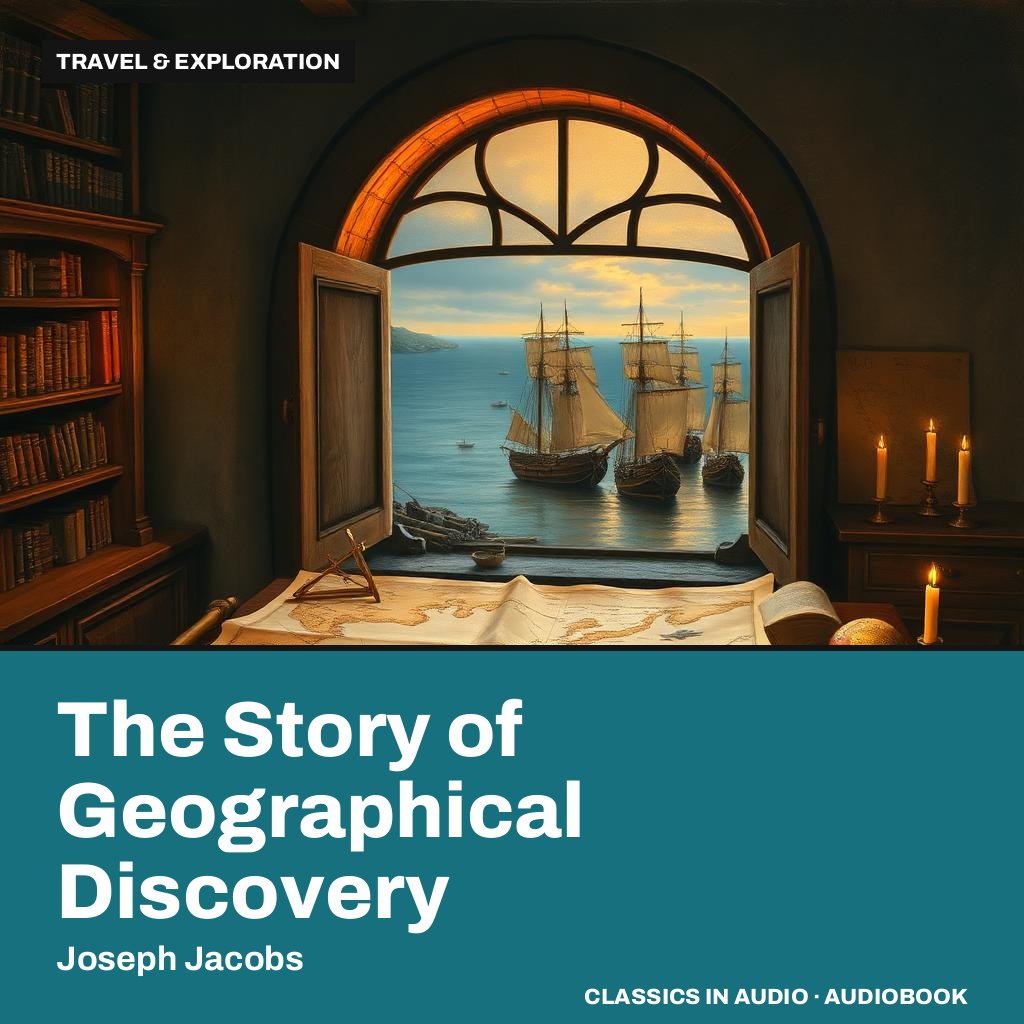
Joseph Jacobs's survey traces how people slowly pieced together a picture of the whole planet, from a Babylonian clay map showing the world ringed by ocean to the Arctic and Antarctic expeditions of the nineteenth century. It is a history of exploration told in twelve chapters, moving from the ancient Mediterranean and the Roman roads to the medieval travels of Marco Polo and Ibn Batuta, then to the Portuguese push around Africa, the Spanish voyages of Columbus and Magellan, and the northern searches by English, French, Dutch and Russian crews.
Jacobs gives the story a clear driving idea: the lure of the East and its spices, which he argues pulled European ships across the oceans long before the hunt for gold took over. The later chapters follow the mapping of Australia and the South Seas, the opening of Africa by Mungo Park, Livingstone and Stanley, and the polar quests of Franklin, Ross and Nansen. The book was planned around maps, and it discusses medieval world maps, sailors' charts and early globes as evidence of what people believed at each stage.
Jacobs, a Australian-born folklorist and historian best known for his English fairy tale collections, wrote it for younger readers, so it is brisk and direct. It still gives a useful sense of why old maps were wrong and how they got corrected.
Text: Project Gutenberg edition no. 14291, read without its licence notices.