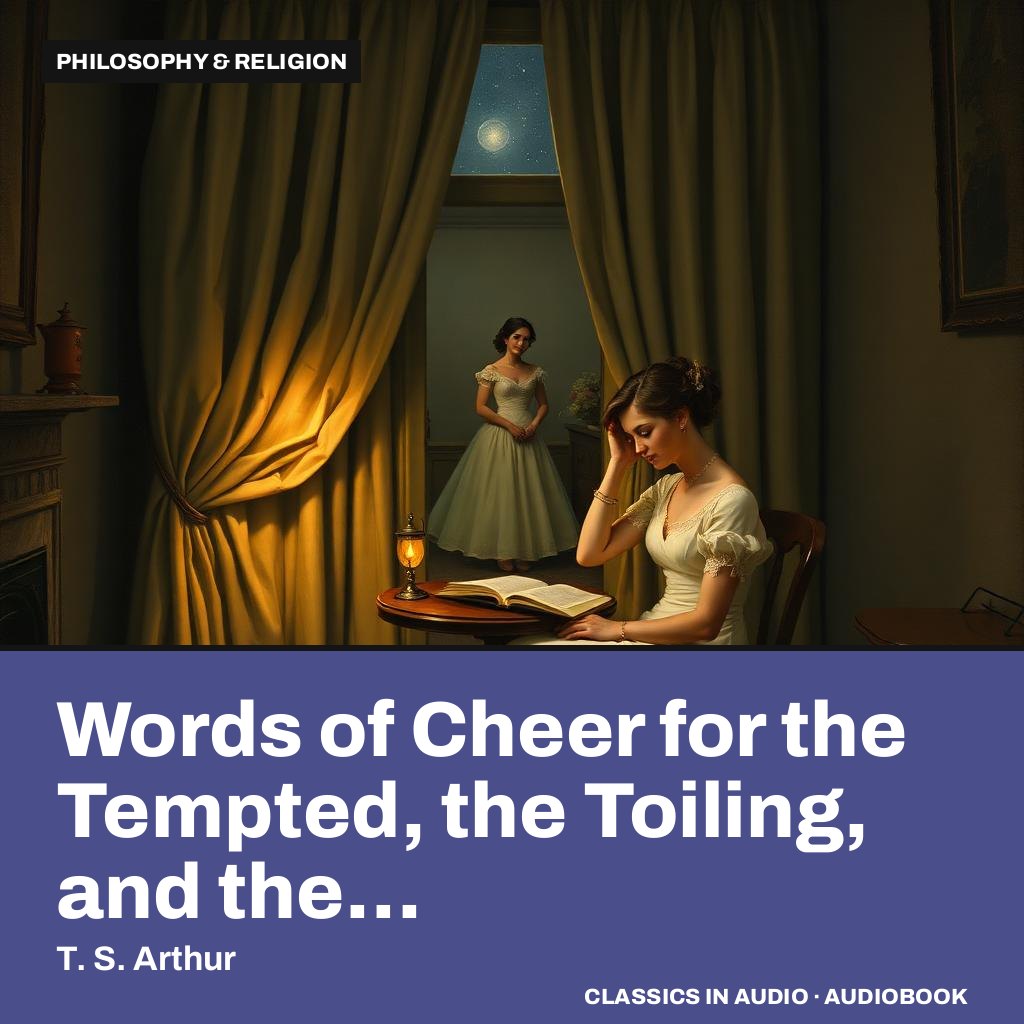
Words of Cheer for the Tempted, the Toiling, and the Sorrowing
by T. S. Arthur (1809–1885)
Unabridged audiobook · about 7 hr 15 min · English · read by a synthetic voice · MP3, no DRM
€4.90
Buy 2 audiobooks or more: −10%. Buy 5 or more: −20%.
Secure payment by Stripe. Your download link is e-mailed to you at once: the first 30 minutes are usually ready within a few minutes, and the rest follows while you listen. Listen online or download the MP3.
Words of Cheer is a collection of short moral tales, sketches and reflections by T. S. Arthur, the Pennsylvania-born American writer best known for the temperance novel Ten Nights in a Bar-Room. Written for a nineteenth-century audience of Christian homes, the pieces speak to people worn down by grief, hard work, loneliness or temptation, and they offer comfort in plain, earnest language.
The opening story, "Aunt Mary," sets the tone. Mary Clinton, a gentle woman of about thirty-five, sits alone by a night-lamp after a party, weeping over the family she lost to cholera and the love that failed her. She now lives in her wealthy brother's house, where she feels like a stranger, while her lively niece Alice comes home flushed from the evening's pleasures and hardly guesses what her aunt is feeling. The contents promise more of the same: stories of sick children, aged grandfathers and quiet village churches, set beside short pieces on kindness, patience, wealth, and the small duties of a day.
The book gives a close view of how ordinary Americans of the 1850s understood sorrow, duty and consolation. Listeners who like domestic fiction and devotional writing will find it a gentle record of a vanished moral world.
Text: Project Gutenberg edition no. 4619, read without its licence notices.
More by T. S. Arthur
 Who Are Happiest? and Other StoriesT. S. Arthur1 hr 58 min€3.90
 Grappling with the MonsterT. S. Arthur6 hr 42 min€4.90
 After a Shadow, and Other StoriesT. S. Arthur3 hr 42 min€3.90





