A Key to Uncle Tom's Cabin
Presenting the Original Facts and Documents Upon Which the Story Is Founded. Together with Corroborative Statements Verifying the Truth of the Work.
by Harriet Beecher Stowe (1811–1896)
Unabridged audiobook · about 22 hr 36 min · English · read by a synthetic voice · MP3, no DRM
€7.90
Buy 2 audiobooks or more: −10%. Buy 5 or more: −20%.
Secure payment by Stripe. Your download link is e-mailed to you at once: the first 30 minutes are usually ready within a few minutes, and the rest follows while you listen. Listen online or download the MP3.
Published in 1853, a year after Uncle Tom's Cabin became a sensation, this is Harriet Beecher Stowe's answer to critics who called her novel exaggerated. It is a work of documentation, not fiction. She goes through the story character by character and incident by incident, showing the real people, court cases, laws, newspaper notices and personal testimonies that stood behind it. She compares her novel to a mosaic, each fragment taken from fact.
The opening chapters introduce the slave trader of the novel's first scene and trace him to the dealers, kidnappers and slave-catchers she had learned about in the United States of the 1840s and early 1850s. Later sections turn to statute books, judicial decisions and the history of how American churches responded to slavery, which she treats as a moral and religious question. Stowe, the daughter of a minister and a longtime resident of Ohio, across the river from Kentucky, writes with urgency and plain anger, and admits the novel softened what it described.
For anyone curious about how a bestselling novel was defended, or about the evidence used in the national argument before the Civil War, this book offers an unusually direct view.
Text: Project Gutenberg edition no. 54812, read without its licence notices.
More by Harriet Beecher Stowe
 Uncle Tom's CabinHarriet Beecher Stowe16 hr 20 min€6.90
 Life of Harriet Beecher StoweHarriet Beecher Stowe14 hr 01 min€5.90
 Oldtown Fireside StoriesHarriet Beecher Stowe2 hr 46 min€3.90
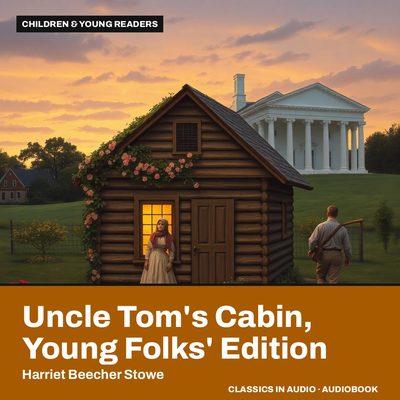 Uncle Tom's Cabin, Young Folks' EditionHarriet Beecher Stowe1 hr 27 min€3.90
 The Pearl of Orr's IslandHarriet Beecher Stowe11 hr 16 min€5.90
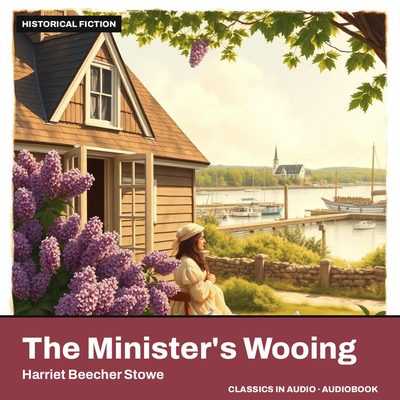 The Minister's WooingHarriet Beecher Stowe11 hr 56 min€5.90
More history
 The Dogaressas of Venice (the Wives of the Doges)Edgcumbe Staley9 hr 17 min€4.90
 Miniatures of French HistoryHilaire Belloc5 hr 44 min€4.90
 The Catholic Church and HistoryHilaire Belloc2 hr 16 min€3.90
 The History of the Peloponnesian WarThucydides18 hr 37 min€6.90
 The Anabasis of AlexanderArrian13 hr 55 min€5.90
 AnabasisXenophon8 hr 32 min€4.90