
A Ten Years' War
An Account of the Battle with the Slum in New York
by Jacob A. Riis (1849–1914)
Unabridged audiobook · about 4 hr 53 min · English · read by a synthetic voice · MP3, no DRM
€3.90
Buy 2 audiobooks or more: −10%. Buy 5 or more: −20%.
Secure payment by Stripe. Your download link is e-mailed to you at once: the first 30 minutes are usually ready within a few minutes, and the rest follows while you listen. Listen online or download the MP3.
A Ten Years' War is Jacob Riis's report from the front line of New York's struggle against its worst housing and poverty, written in 1900 as a sequel to his famous How the Other Half Lives. It covers roughly the decade after that first book appeared, and asks a plain question: what actually changed once the city's conscience was roused?
Riis opens by arguing that the slum is as old as civilization, and that it cannot be left to fix itself. From there he takes the reader street by street through the Lower East Side: the old rear tenements, the lodging rooms of police stations, the alley known as Bone Alley, and the crowded block of Mulberry Bend, which was finally torn down and turned into a park. He describes new model tenements, schools with rooftop playgrounds, and the day Colonel Waring's street cleaners swept away years of filth. Politicians, reformers, and Theodore Roosevelt all appear.
Riis was a Danish immigrant who worked as a police reporter before becoming a crusading writer and photographer, so he writes from long familiarity with these streets. The book is a useful record of how reform was fought for in practice, with its victories, its setbacks, and its arguments about who owes what to whom, and many of those arguments about housing still sound familiar.
Text: Project Gutenberg edition no. 38821, read without its licence notices.
More by Jacob A. Riis
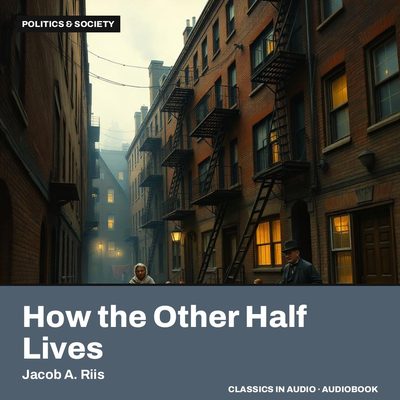 How the Other Half LivesJacob A. Riis7 hr 39 min€4.90
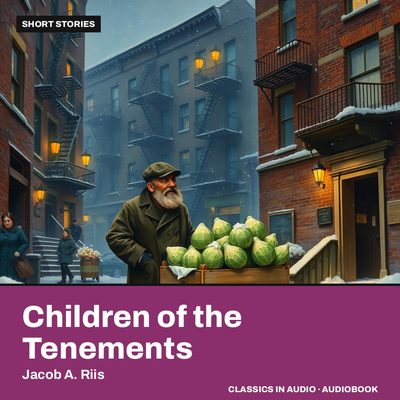 Children of the TenementsJacob A. Riis7 hr 44 min€4.90
 The Battle with the SlumJacob A. Riis8 hr 49 min€4.90
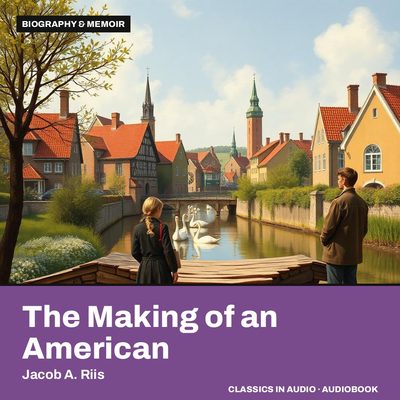 The Making of an AmericanJacob A. Riis8 hr 53 min€4.90
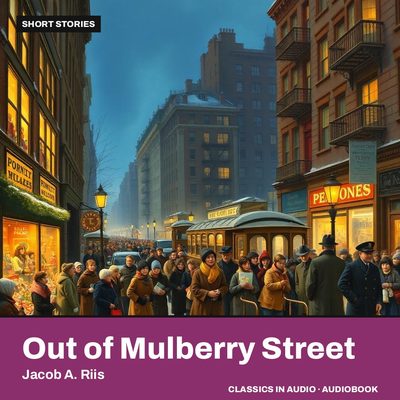 Out of Mulberry StreetJacob A. Riis4 hr 49 min€3.90
 The Children of the PoorJacob A. Riis7 hr 46 min€4.90
More politics & society
 The PrinceNiccolò Machiavelli4 hr 37 min€3.90
 LeviathanThomas Hobbes19 hr 44 min€6.90
 Second Treatise of GovernmentJohn Locke5 hr 07 min€4.90
 An Inquiry into the Nature and Causes of the Wealth of NationsAdam Smith36 hr 32 min€9.90
 The Eclipse of RussiaEmile Joseph Dillon14 hr 56 min€5.90
 Democracy—false or True?Sir William Blake Richmond5 hr 18 min€4.90