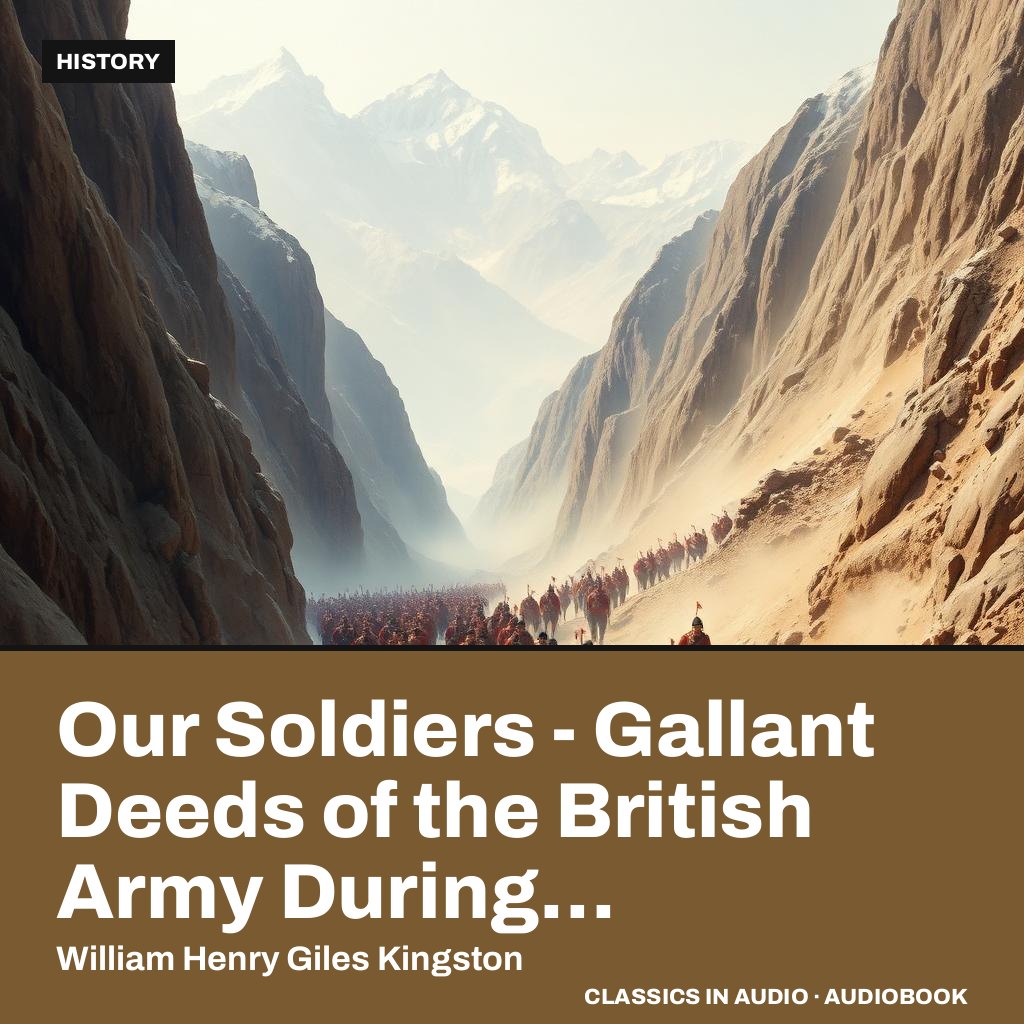
Our Soldiers - Gallant Deeds of the British Army During Victoria's Reign
by William Henry Giles Kingston (1814–1880)
Unabridged audiobook · about 10 hr 04 min · English · read by a synthetic voice · MP3, no DRM
€5.90
Buy 2 audiobooks or more: −10%. Buy 5 or more: −20%.
Secure payment by Stripe. Your download link is e-mailed to you at once: the first 30 minutes are usually ready within a few minutes, and the rest follows while you listen. Listen online or download the MP3.
William Henry Giles Kingston, a prolific Victorian writer best known for his adventure stories for boys, here turns to fact: a collection of episodes from the campaigns the British Army fought during Queen Victoria's long reign. The book is a military history told through individual acts of courage, gathered under the headings of the wars in which they happened.
The opening chapters follow the first Afghan War of 1839 and the events leading up to it. Kingston sketches the quarrel over the Afghan throne between Dost Mahomed and the exiled Shah Soojah, then describes the siege of Herat, where a young officer, Lieutenant Eldred Pottinger, helped the Afghans hold out against a Persian army. The narrative then follows the British and Indian columns through the snowbound Bolan Pass and across desert country where food ran short, toward the fortress of Ghuznee and a plan to blow open one of its gates before dawn.
The book is plainly a product of its age, written for a public that admired the army, yet it is notably frank in calling the Afghan expedition an act of aggression. That mix of admiration for the soldiers and doubt about their masters makes it a revealing record of how Victorian Britain understood its wars.
Text: Project Gutenberg edition no. 23052, read without its licence notices.
More by William Henry Giles Kingston
 How Britannia Came to Rule the WavesWilliam Henry Giles Kingston15 hr 47 min€6.90
 The Western WorldWilliam Henry Giles Kingston15 hr 42 min€6.90
 The Three AdmiralsWilliam Henry Giles Kingston15 hr 36 min€6.90
 From Powder Monkey to Admiral - A Story of Naval AdventureWilliam Henry Giles Kingston10 hr 44 min€5.90
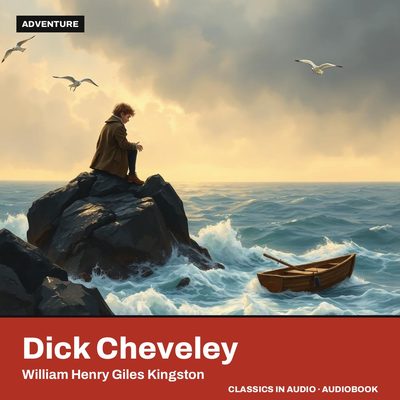 Dick CheveleyWilliam Henry Giles Kingston9 hr 22 min€4.90
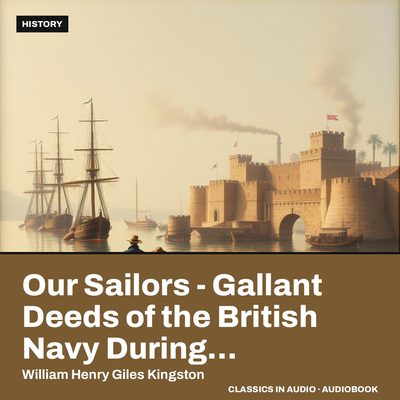 Our Sailors - Gallant Deeds of the British Navy During Victoria's ReignWilliam Henry Giles Kingston9 hr 23 min€4.90
More history
 The Dogaressas of Venice (the Wives of the Doges)Edgcumbe Staley9 hr 17 min€4.90
 Miniatures of French HistoryHilaire Belloc5 hr 44 min€4.90
 The Catholic Church and HistoryHilaire Belloc2 hr 16 min€3.90
 The History of the Peloponnesian WarThucydides18 hr 37 min€6.90
 The Anabasis of AlexanderArrian13 hr 55 min€5.90
 AnabasisXenophon8 hr 32 min€4.90