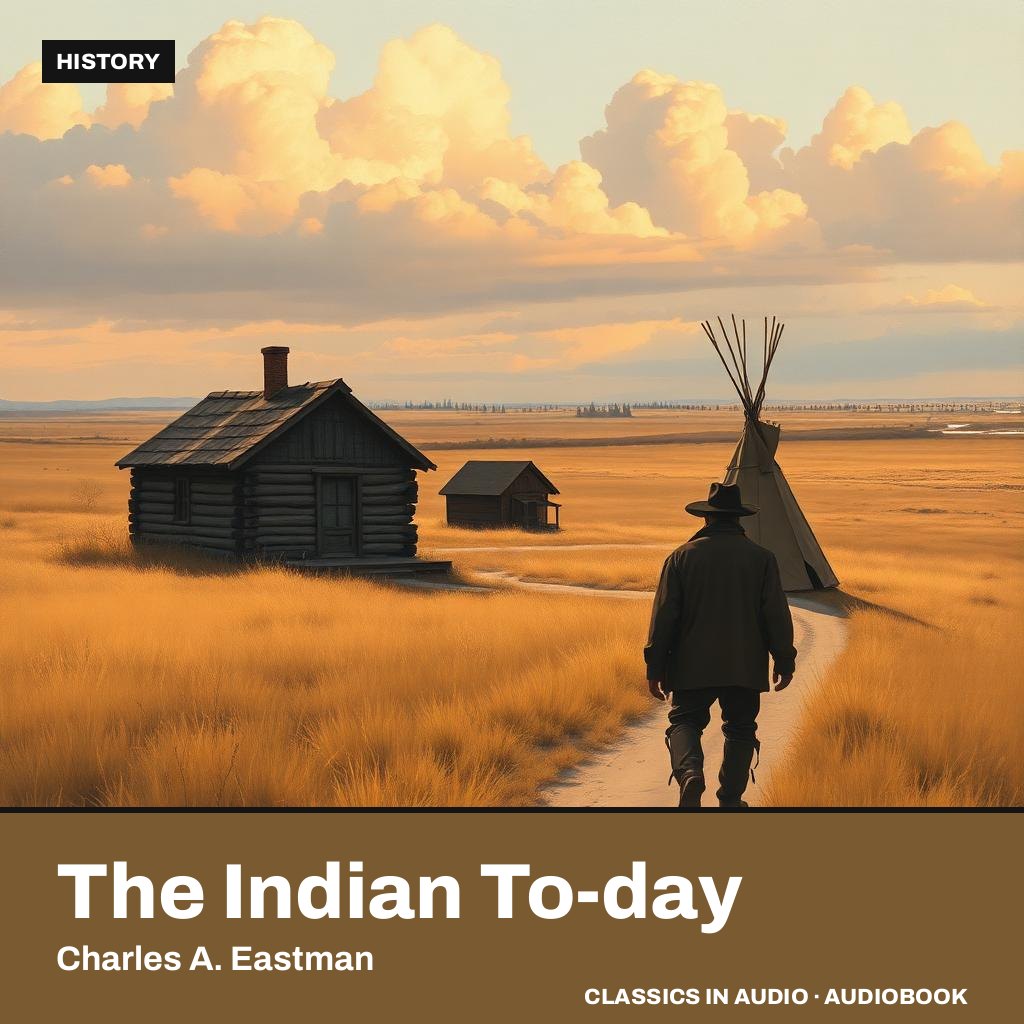
The Indian To-day
The Past and Future of the First American
by Charles A. Eastman (1858–1939)
Unabridged audiobook · about 3 hr 31 min · English · read by a synthetic voice · MP3, no DRM
€3.90
Buy 2 audiobooks or more: −10%. Buy 5 or more: −20%.
Secure payment by Stripe. Your download link is e-mailed to you at once: the first 30 minutes are usually ready within a few minutes, and the rest follows while you listen. Listen online or download the MP3.
Published in 1915, The Indian To-day is a short work of history and social commentary on the position of Native Americans at the start of the twentieth century. It begins with the life of the plains peoples before the reservations, then follows the wars, the agency system, government policy, schooling, health, citizenship and the arts and industries of Native communities. The closing chapter asks what the Indian has given to the nation.
Charles Eastman, whose Sioux name was Ohiyesa, is an unusual guide. He was born in 1858 in a buffalo-hide teepee in Minnesota and spent his first fifteen years in the traditional life of his people. He then entered American schools, graduated from Dartmouth, and qualified as a physician at Boston University. He served as a doctor at Pine Ridge in South Dakota during the troubled winter of 1890-91, and later worked as an advocate for his tribe in Washington.
The book is plainly argued and written for a general public that knew little of Native life. Eastman is critical of broken promises and clumsy administration, yet hopeful about education and citizenship. Listeners will find a firsthand account of how a policy debate looked to someone living inside it, and a reminder that these questions were, and remain, living ones.
Text: Project Gutenberg edition no. 27448, read without its licence notices.
More by Charles A. Eastman
 Wigwam EveningsCharles A. Eastman2 hr 02 min€3.90
 The Soul of the IndianCharles A. Eastman1 hr 37 min€3.90
 Indian BoyhoodCharles A. Eastman4 hr 55 min€3.90
 Indian Heroes and Great ChieftainsCharles A. Eastman3 hr 38 min€3.90
 Indian Child LifeCharles A. Eastman2 hr 16 min€3.90
 Old Indian DaysCharles A. Eastman4 hr 23 min€3.90
More history
 The Dogaressas of Venice (the Wives of the Doges)Edgcumbe Staley9 hr 17 min€4.90
 Miniatures of French HistoryHilaire Belloc5 hr 44 min€4.90
 The Catholic Church and HistoryHilaire Belloc2 hr 16 min€3.90
 The History of the Peloponnesian WarThucydides18 hr 37 min€6.90
 The Anabasis of AlexanderArrian13 hr 55 min€5.90
 AnabasisXenophon8 hr 32 min€4.90