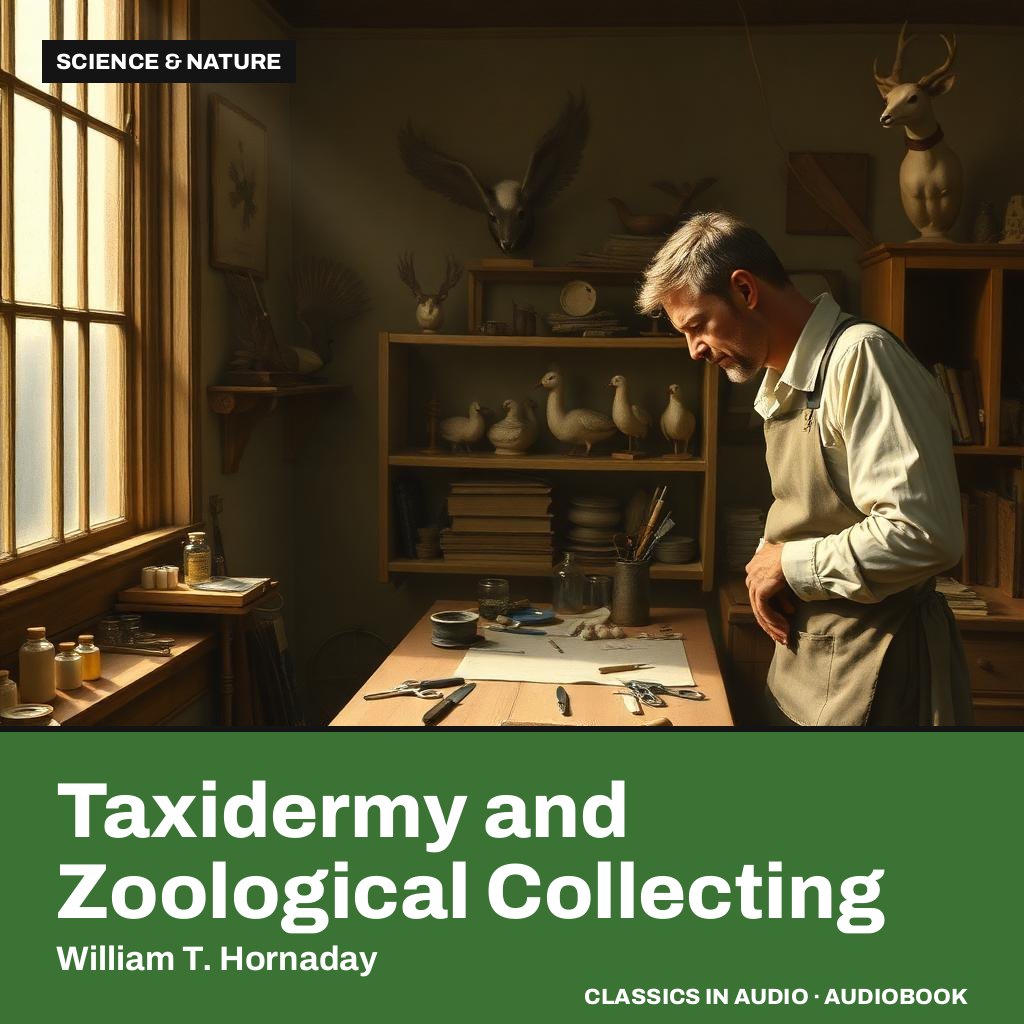
Taxidermy and Zoological Collecting
A Complete Handbook for the Amateur Taxidermist, Collector, Osteologist, Museum-Builder, Sportsman, and Traveller
by William T. Hornaday (1854–1937)
Unabridged audiobook · about 11 hr 48 min · English · read by a synthetic voice · MP3, no DRM
€5.90
Buy 2 audiobooks or more: −10%. Buy 5 or more: −20%.
Secure payment by Stripe. Your download link is e-mailed to you at once: the first 30 minutes are usually ready within a few minutes, and the rest follows while you listen. Listen online or download the MP3.
Published in 1891, this is a practical manual for anyone who wants to collect animals and preserve them for study or display. William T. Hornaday wrote most of it, and W. J. Holland contributed the chapters on insects. The first part covers the field: outfits, hunting hints, choosing fresh specimens, and skinning and curing small and large mammals, birds, reptiles, fishes, marine invertebrates, and eggs and nests. The second part moves to the workshop, with chapters on setting up a laboratory, mounting animals of every size, building manikins, modeling faces and mouths, mounting trophy heads, and arranging whole groups for a museum case.
Hornaday was a working taxidermist who later became a leading figure in American wildlife conservation. His preface complains that earlier manuals offered too much padding and too little hands-on instruction, and the book answers with detailed, step-by-step directions. It also carries a note of alarm. He lists species already beyond a collector's reach, such as the great auk and the Labrador duck, and warns that the bison, walrus, and plume birds are following.
Today it reads as a record of Victorian natural history, when museums were growing fast and wildlife was vanishing faster. It will interest anyone curious about how specimens were prepared, and how people of that era understood animals.
Text: Project Gutenberg edition no. 40109, read without its licence notices.
More by William T. Hornaday
 The Extermination of the American BisonWilliam T. Hornaday8 hr 45 min€4.90
 Popular Official Guide to the New York Zoological Park (September 1915)William T. Hornaday5 hr 16 min€4.90
 The Minds and Manners of Wild AnimalsWilliam T. Hornaday9 hr 36 min€4.90
More science & nature
 Body-build and Its InheritanceCharles Benedict Davenport7 hr 56 min€4.90
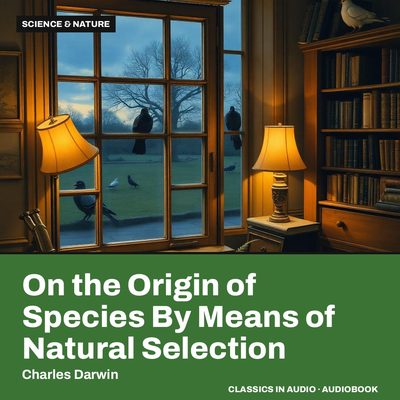 On the Origin of Species By Means of Natural SelectionCharles Darwin15 hr 22 min€6.90
 The Interpretation of DreamsSigmund Freud20 hr 00 min€6.90
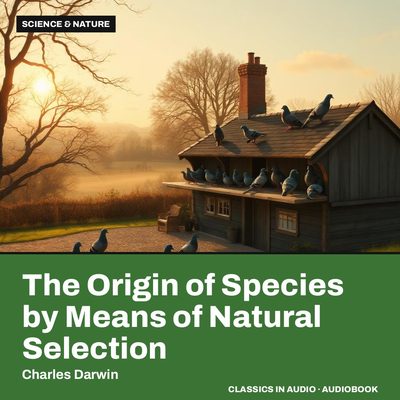 The Origin of Species by Means of Natural SelectionCharles Darwin20 hr 41 min€7.90
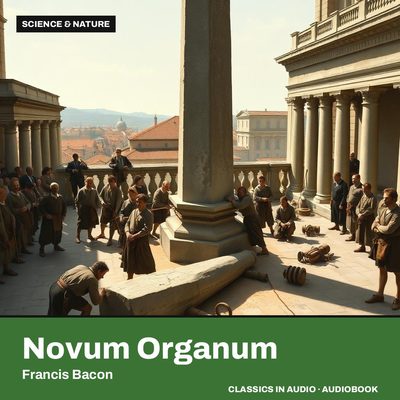 Novum OrganumFrancis Bacon8 hr 50 min€4.90
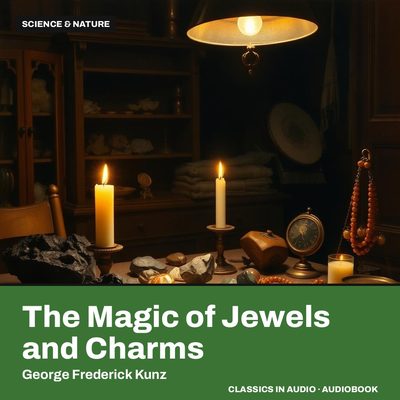 The Magic of Jewels and CharmsGeorge Frederick Kunz13 hr 31 min€5.90